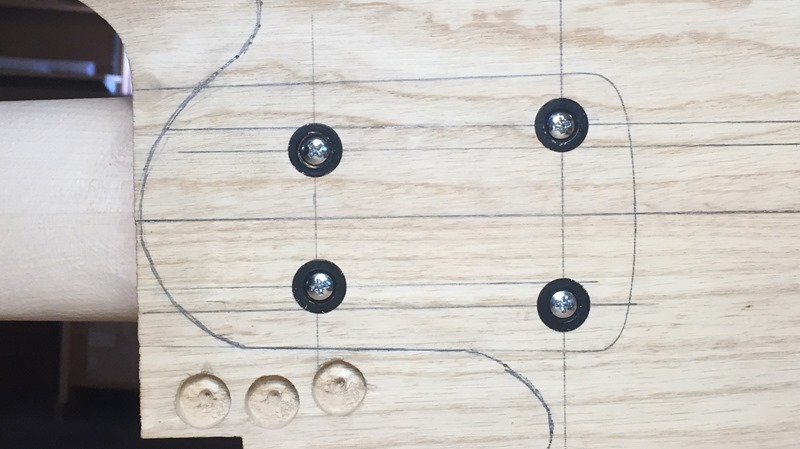
In this particular installation, a bolt plate will not be used as would typically be seen on a Fender P or J bass. Instead, the mounting screws will be inside ferrules.
Note: This step is split into two parts. This is part 1.
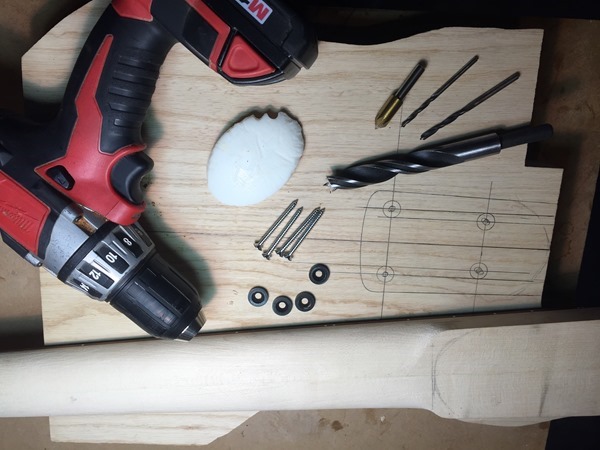
Below: Tools needed: Drill, mounting screws, neck ferrules, bar of soap, 15mm bradpoint bit, 4mm bit, 1/8th-inch bit, countersink 45-degree chamfer bit
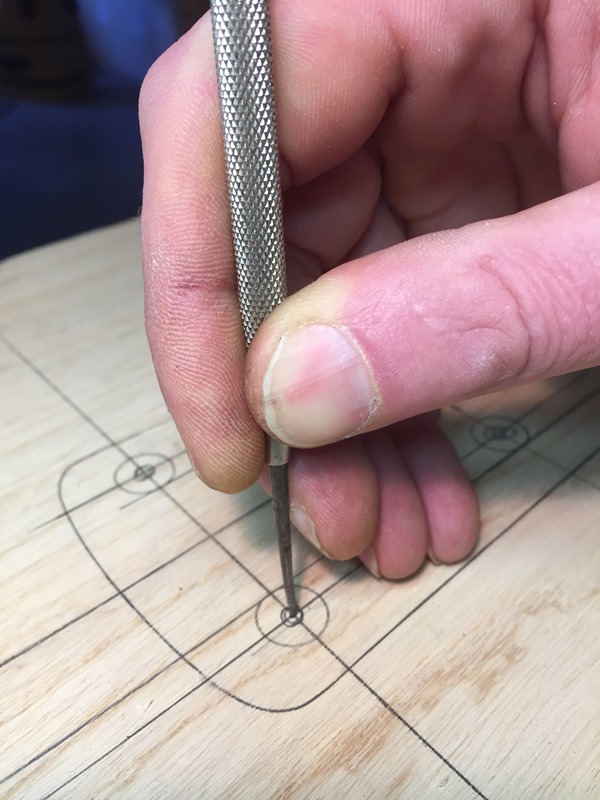
Below: Centerpunching holes where the holes will go.
Below: Drilling test holes and setting up drill press depth stop so ferrules are all recessed by the same amount.
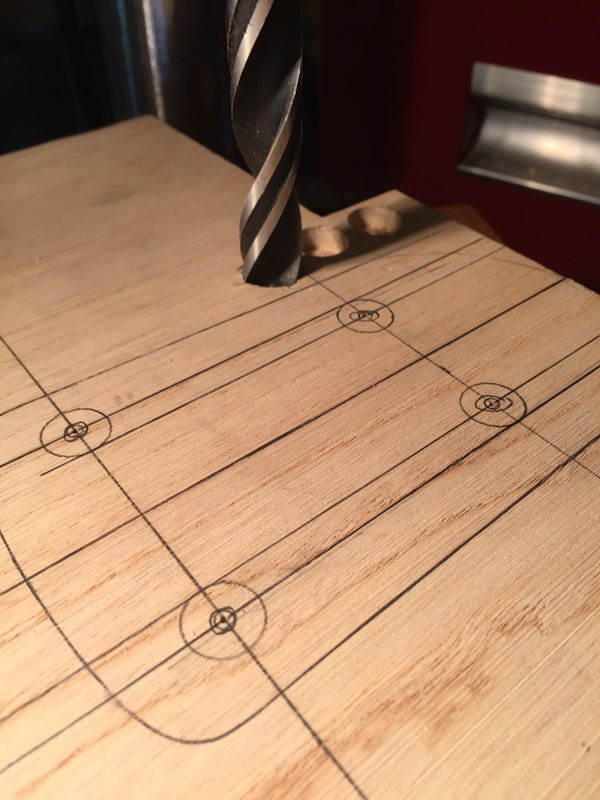
Below: Test holes are outside of the main shape for testing purposes. For this build, it took 3 holes to determine the correct depth.
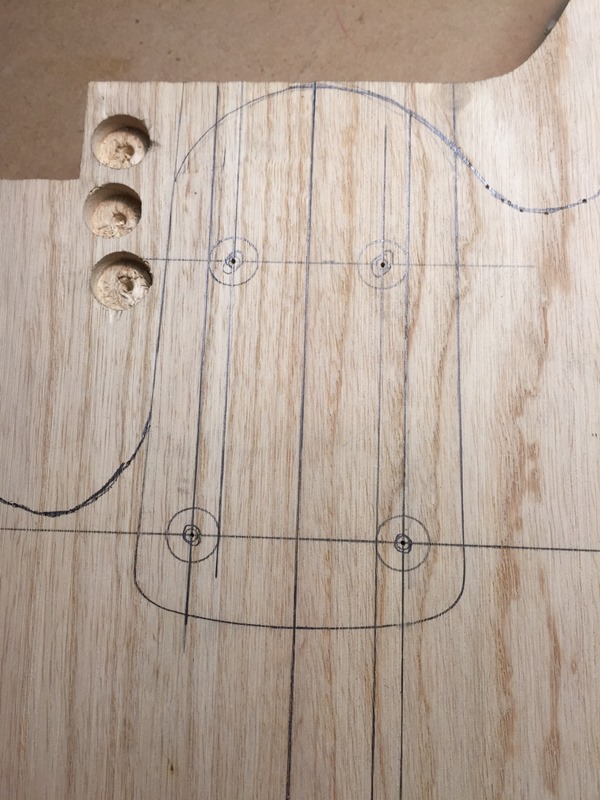
Below: Drilling the first hole.
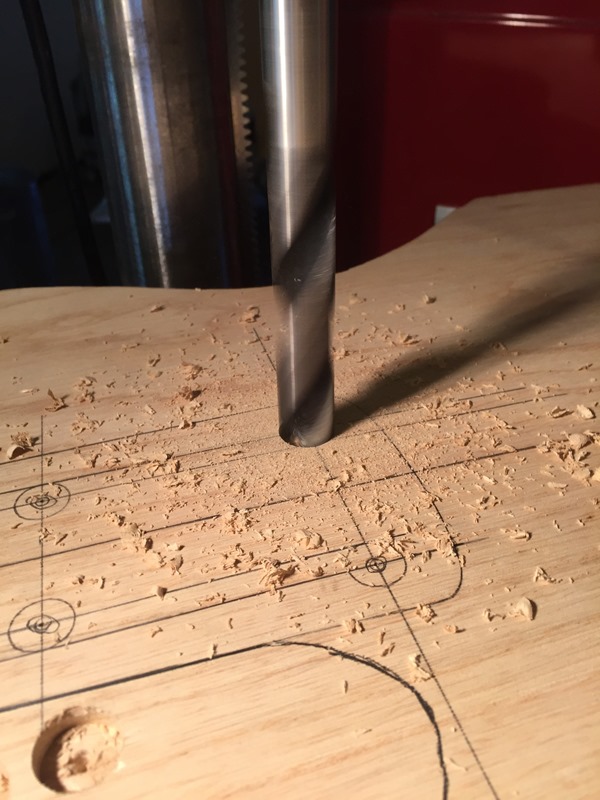
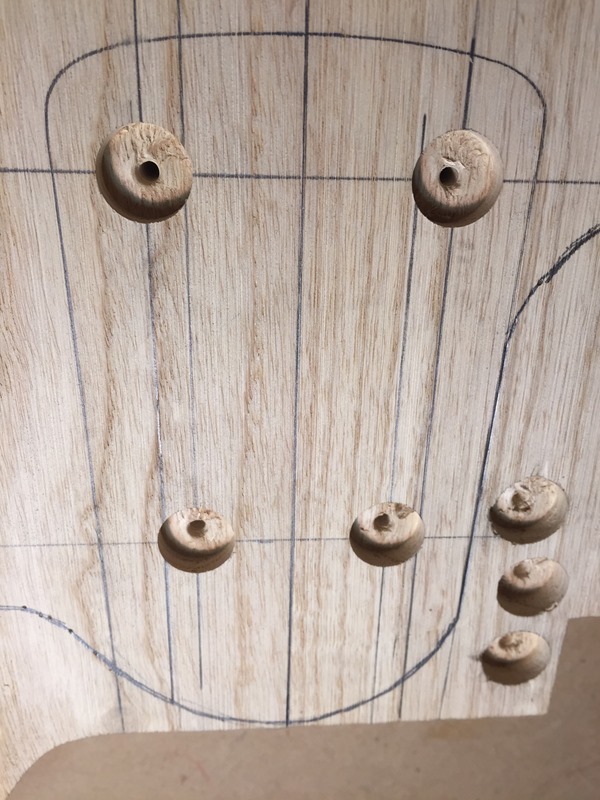
Below: All holes drilled for ferrule recesses using 15mm bit.
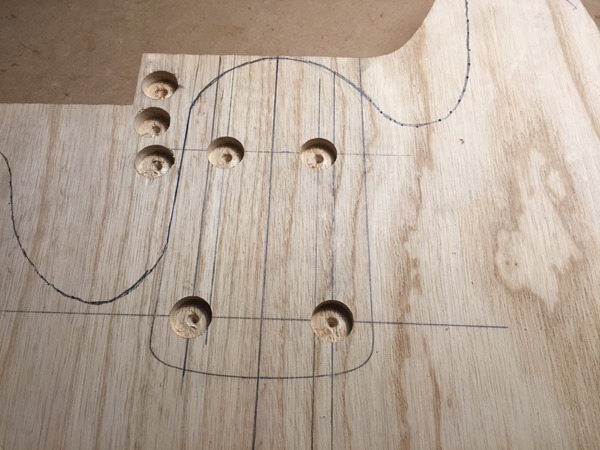
Note: The size drill bit you use is finish-dependent. Oil finishes can use smaller bits such as the 15mm. For spray finishes, such as a candy-style finish or polyurethane, this requires a larger bit such as 5/8th-inch bit.
Below: 1/8th drill bit is now used to drill the holes all the way through and out to the other side into the neck pocket.
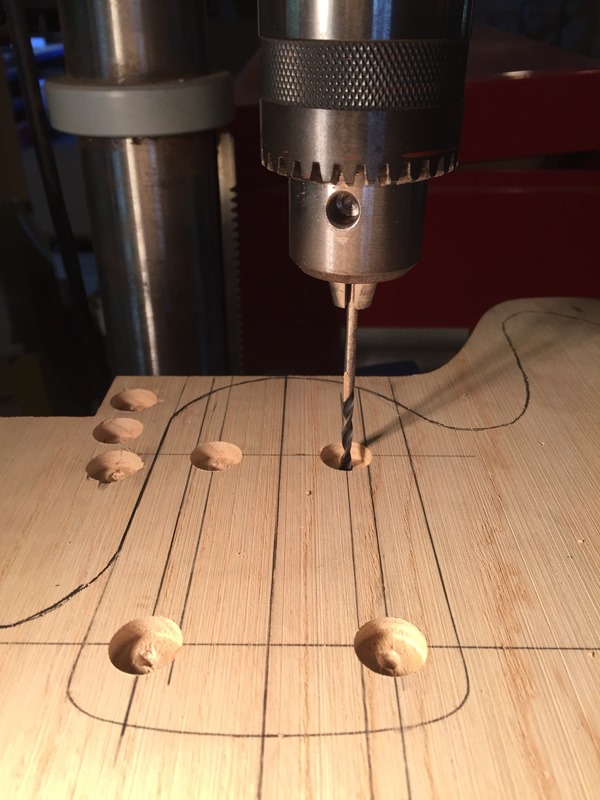
Below: Finished all 4 holes with the 1/8th bit.
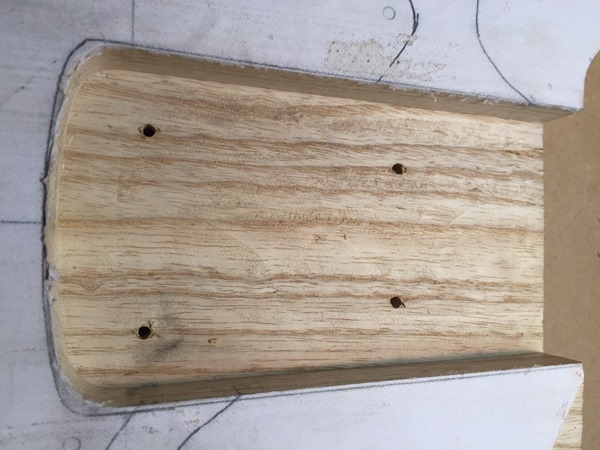
Below: A view from the other side (neck pocket.)
In part 2 of this step, the neck mounting process will be completed!
Where are the rest of the build steps?
You can view them all here.

Why wouldn’t you drill the .125 first?
When I build my solid body guitars I’ll set up my CNC to drill thru first, then counter sink next.
I guess it’s 6 of one and a half of a dozen isn’t it?
Mixed measurement units. A pet hate of mine 🙂 What size is the 15mm bit in imperial measurements please?
Thank you.
Rob. I find using a bullet tip bit first then gives the perfect centered starting indentation for the screw hole
Mark . 15mm = 19/32″
I use a forstner bit which cuts a clean, flat-bottomed hole and also has a center point which can be used as a guide to the smaller hole.