
See the business listing for this bass builder here
The feature bass for this week comes from Switzerland!
Builder David Emm writes:
As a drummer/guitarist I have always wanted to play the bass as well but up until now, I’ve never had one. I’ve played on many friends basses but without owning one. It’s hard to actually learn how to play properly.
Midway through 2015 I decided this had to change. After looking around trying to find the right bass and not finding “the one,” I came to the conclusion that maybe I should create the bass I wanted myself.
A friend had a Music Man Stingray and that was my favourite bass I had played, so I decided this should be the guitar I base my creation off of.
The main differences between the Music Man and my guitar would be that I would be building a neck through, and mine would be “short scale”. After attempting to play a few short scale basses in music stores, I concluded I was on the right track.
With there being a much lower supply of spare parts and hardware here in Switzerland, I sourced most of my parts from the USA and the UK, including from Best Bass Gear. My wood was sourced from Exotic Hardwoods LTD UK. After watching several months worth of YouTube videos, I finally started the build over the Christmas holiday period and the bass was finally completed at the end of January 2016.
Despite being my first build from scratch (I had assembled a Stratocaster from parts) I was confident the months of building it in my head whilst watching YouTube would pay off, and it did. Knowing what I needed to do and in pretty much the right order made the project run quickly and I’m very happy with the end result. The only problem I have now (and I hereby warn other self-builders about this) is that I now have the building bug and have the idea for numerous further projects of bass guitars, electric guitars, and even an electric violin in my head, I just have to work out how find the time and means to get the ideas out of my head and into existence in the real world. I would like to offer some advice to anyone else thinking of building their own instrument in the future and I have 4 main points and they are mostly about tools.
1 Building a guitar is mostly about tools and how you use them, make sure you know how each tool works and test EVERY tool you use on spare wood before you use it, I learned this the hard way when my borrowed Router (which it tuned out was full of rust in the motor and collet) spat the bit out and put a massive hole in my neck wood right at the start of my project. Needless to say, that Router wasn’t used again and I ended up buying a new one. I hadn’t yet 100% learnt my lesson when I started using chisels and planes that didn’t cut properly, after that mistake, it sunk in.
2 Buy, Borrow, Beg, acquire-in-some-way GOOD quality tools. Normal DIY handymans tools will probably do the job, but only just. Good quality tools, make things easier, they do their job properly allowing you to concentrate on what you are doing and this reduces time, stress, mistakes and problems. Be prepared you may have to budget buying tools for your build, good tools will allow you to do many many projects, cheap tools and low quality tools may not even finish the first one!
3 if you plan to use hardwood, FIND A BANDSAW, you don’t need to buy one, just find one you can use for your main cuts, the neck profile and body outline. Bandsaws are 10000% better then Jigsaws to cut hardwood, the cut is cleaner, it cuts easier, you have much less vibration through your hands. My attempts to cut my neck out with a Jigsaw nearly ruined my whole project, luckily I found a friend of a friend who had a bandsaw and I used that to clean up my shapes and outlines giving me a much more accurate and cleaner finish. I hate to think what I would have ended up with if I only had my jigsaw to cut the outlines.
4 Using hand tools is a much practiced skill. This is a skill I was out of practice with and using imperfect planes and chisels (even after sharpening) were making a mess of my wood. Power tools saved the day. I used an angle grinder with a Saburrtooth carving disk to carve the belly cut, the neck/body join, the arm bevel and the back of the guitar. I hadn’t done this before either, but a quick test proved that I was more comfortable with this method.
My bass specifications
Strings – 4
Scale Length – 768mm (30.25”)
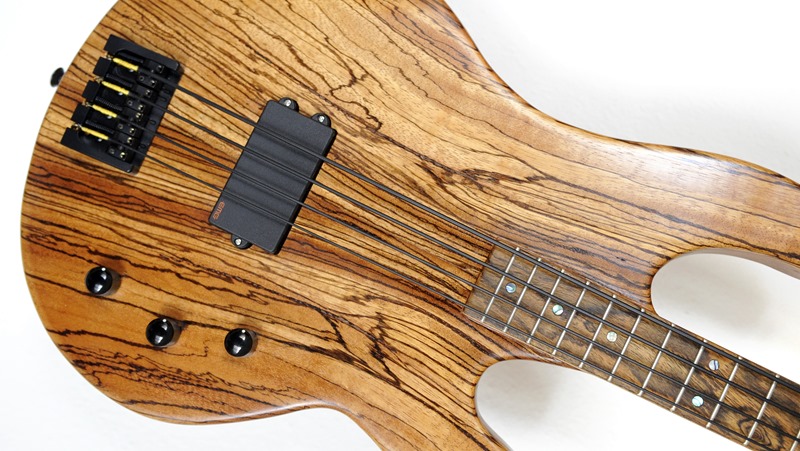
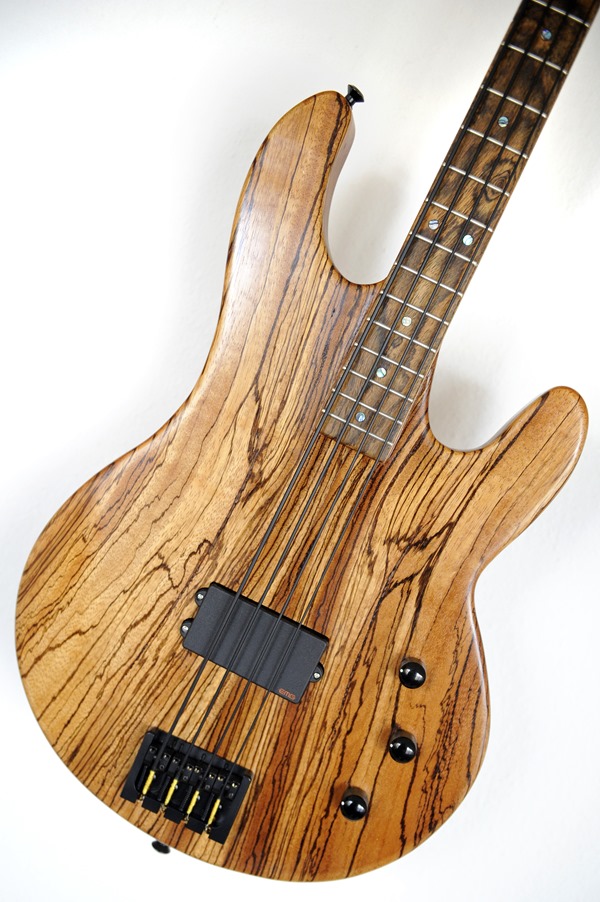
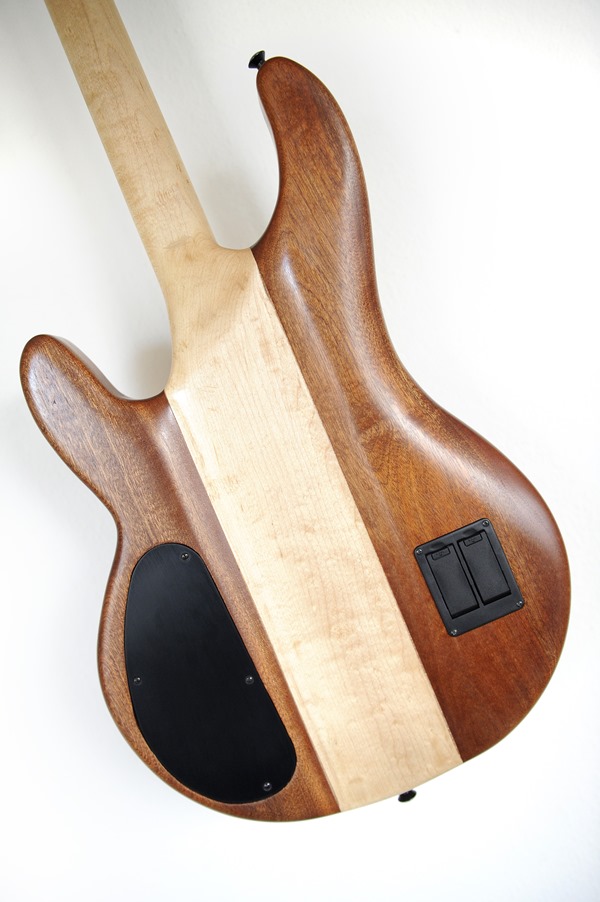
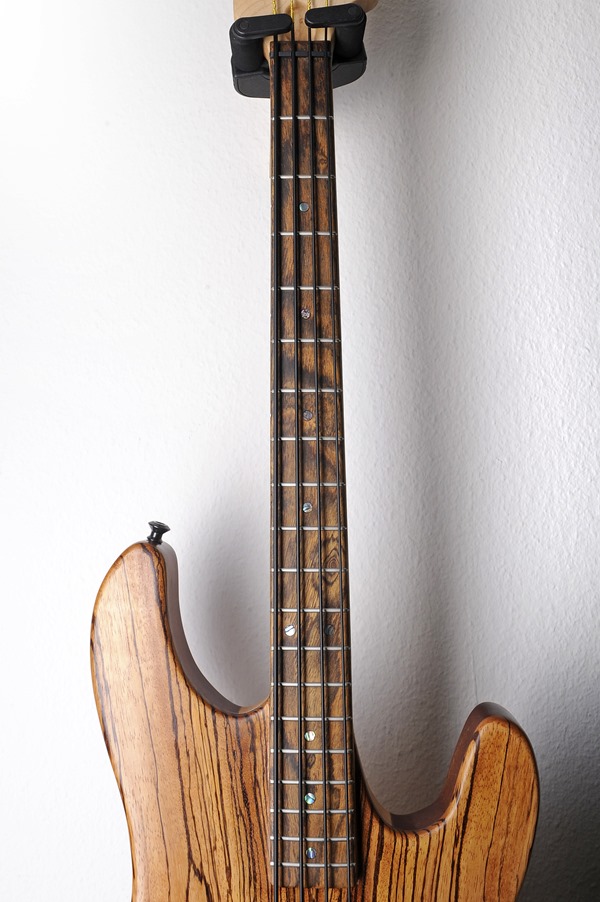
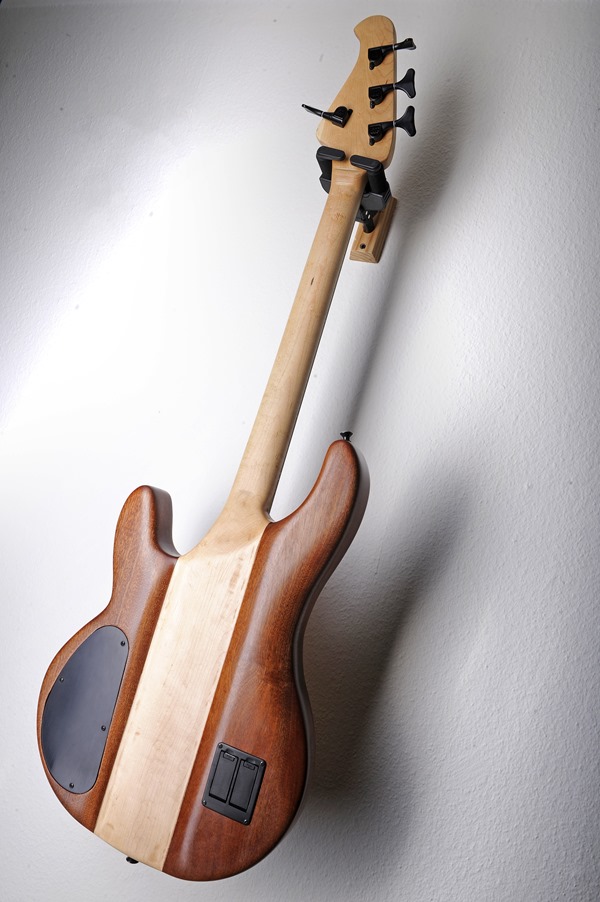
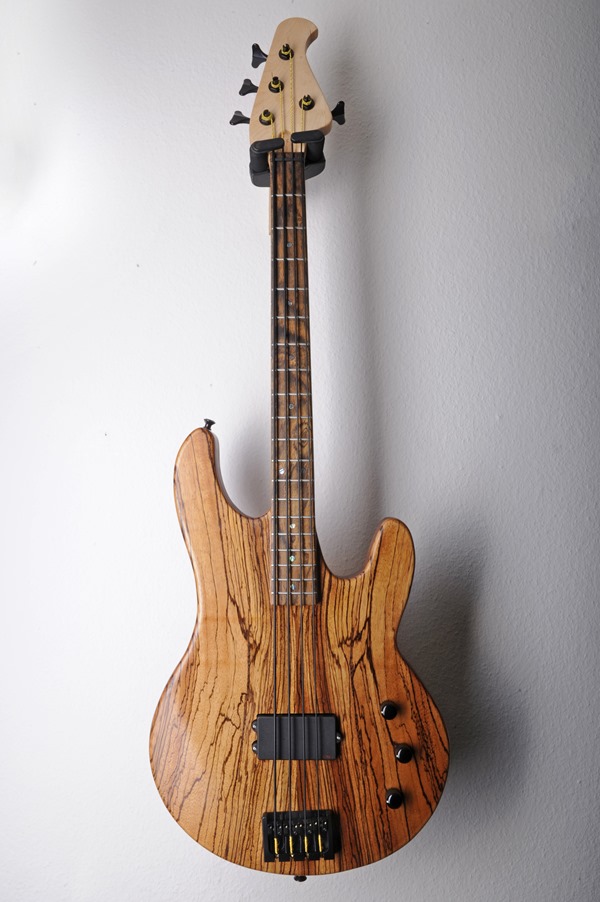
Body wood – Sapele body wings, Zebrawood top
Finish – Hand oiled
Neck wood – Maple with thin hand oiled finish
Nut width – 42mm (1.65”)
Headstock shape – Music Man style 3+1
Neck profile – chunky C at headstock end transitioning to flatter (but not thinner) C/D at neck/body join
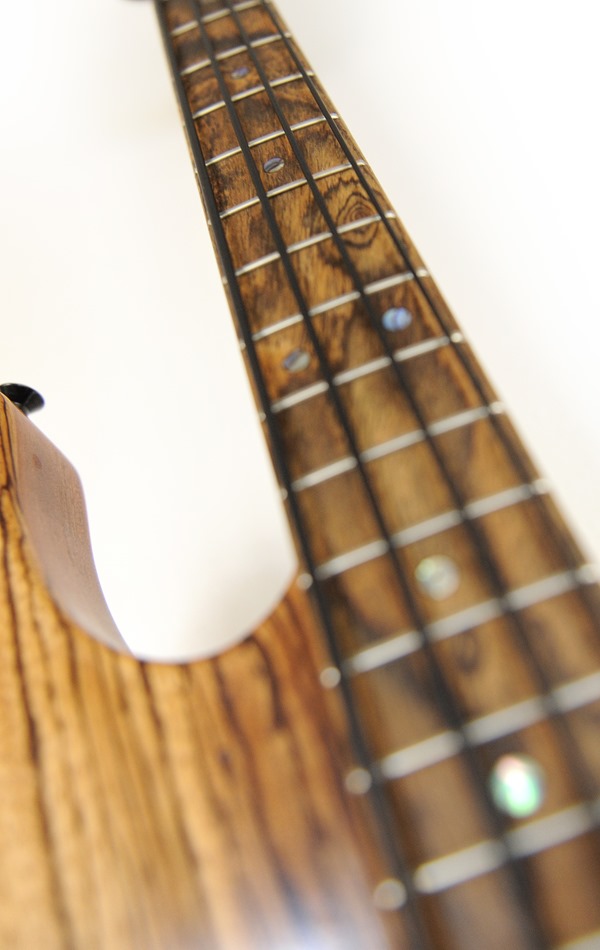
Fingerboard – Mexican Rosewood Bocote
Bridge – Hipshot A style
String Spacing – 16.5mmm (0.656”)
Strings – Rotosound Trubass 88 black nylon tapewound
Tuners – Wilkinson
Pickup – Active EMG MMTW splittable pickup
Preamp/EG – Active EMG BTS Control 2 band EQ
Power – 18V
Weight – 5.0kg (11 lbs)I hope to find a way to record the sounds of this bass and put it on the YouTube, to me it sounds great! However this will first require me to learn how to play it to the point I don’t offend the entire bass community with my terrible skills and secondly I may have to acquire an audio interface
Well done!
Want YOUR bass to be featured for Bass of the Week?
Submit yours now using our easy web form


Love that natural wood finish!
I want one! Beautiful job, and nice to see a short scale bass here!
Love to hear it, if it sounds as good as it looks you have a real winner!
Thanks, theres now a YouTube video online so it can be heard, (see link in my comment)
great job !! / love the carving on the wings were they meet the maple
Great Job ….. especially for a first build. How much does this bass weigh and how wide is the neck at the nut ??? Thanks for Listening …..
Thanks, its 5kg and the nut is 42mm
Wow, gorgeous piece of work! Wish I had the ability, tools and time to learn and try something like this!
Nice work! Where are from in Switzerland? Congrats from a Geneva’s builder
Thanks, i’m in Basel
Is it just me or does it appear that the bridge is not square or centered to the center line of the body?
It appears that way to me too. I would assume it is due to intonation issues. I used a HipShot A bridge on a short scale (30″) bass I made for my son and had to do a similar thing; slightly moving the bass side back a smidgen.
Exactly, thats what was done here, its actually only 1.2mm out of square, but it seems to look much further out then that.
Did you install it square and then try and intonate it, having to redo the installation, or did you have some trick to figure it out before an initial install? I unfortunately had to install multiple times to get it right (partly because I had some issues in the neck which exacerbated the intonation issues, but once I fixed the neck I still ended up moving the bass side slightly back).
I actually installed it like this, I measured the intonation adjustment on some friends bass guitars and checked out how much adjustment the bridge had and realised I needed to compensate for this by skewing it slightly.
The intonation is good on the G, as near as makes a difference dead on on the D, and unfortunately still slightly sharp, but only barely on both the A and E strings even on maximum adjustment. I will leave it as is for the moment, but if I change to regular roundwound strings, i might be tempted to remove it and reinstall it. I get the feeling the nylon strings are hard to intonate perfectly anyway, its been much more of a pain then I ever had with my strat or les paul, so for the moment, i’m going to leave it how it is, this guitar was built so I can work out how to play bass, so as long as it plays good, and sounds good, then its fine for me.
Thanks! I appreciate your follow ups. (Incidentally I am building a 34″ scale 5 string for myself and have these same strings and they sound awesome. I have to redo the nut so currently the string are not installed, but on my test install with my first nut they sounded really nice.)
Really interesting back and I love the fretboard. How short is the scale length?
Thanks, the fretboard is Mexican Rosewood Bocote, its a pretty spectacular wood, the scale length is 30.25″
Thanks for the reply, Ive been making guitars here in Nepal for 7 years using local woods. So far the only really figured wood we’ve found is Mango but we’ll keep looking. I’d love to find some of that Rosewood on your fretboard. Do you find the strings a bit loose due to the short scale length? I wonder if the intonation issues are due to that too unless you found some short scale strings with high tension. I’ve not tried the tape wound strings, how do they sound?
No problem, I actually quite like the look of figured mango, not sure about mango for a fretboard though.
For me, it was a choice between this or cocobolo for the fretboard, cocobolo was my preferred choice before I saw the Mexican rosewood in person, one I saw this piece, it was the piece of wood for me.
The tension doesn’t seem as far off “normal” as you would expect, I find the low E to still be higher tension than the low B on a 34″ scale bass.
You can see how it sounds here https://www.youtube.com/watch?v=RqM_uoRbUZ0, i like it, nice and thick and not as dull as I expected
Great match of the body wood to shape. That zebrawood just begged to become a bass guitar!
Fantastic job for a first build.
David Emm, you’re a genius! Love the bass!
For those who wanted to hear how it sounds, I’ve uploaded a video to YouTube. https://www.youtube.com/watch?v=RqM_uoRbUZ0
Please bear in mind that I’m not a bassist, this bass was built so I could learn how to play!
Thanks again all.
Love the wood, dude! Headstock shape is awesome. EMGs are my choice for pickups as well. Nice job!