

This week’s BotW is an absolute beauty from Todd Mullin.
Here’s one of my own creations that I thought you might enjoy peeking at – it’s my “ThunderStick” scratch-built 8-string. The build is documented in the Luthier’s Corner over on TalkBass, but here’s a synopsis:
A real rock machine! I always wanted an 8-string, and after converting an old Ibanez Destroyer, I set out to build a “real” one. It’s clearly inspired by the Hamer 8- and 12-stringers, as well as the original Gibson EB-0, with its LPDC body. The DarkStar/OBP-1 combo is absolutely thunderously huge. Big fun to play, partly because guitarists find it so scary!
Featuring
- Contoured one-piece African mahogany body
- Inlaid black walnut pickguard
- Asymmetrically carved Honduran mahogany/wenge/maple neck, 32″ scale
- Hand-rubbed Tung oil finish
- A single DarkStar pickup run through an Aguilar OBP-1
- Three-point bridge with hand-shaped compensated aluminum saddles
- Fundamental strings go through the body; octaves anchor at the bridge
- Dual Hipshot D-Tuners

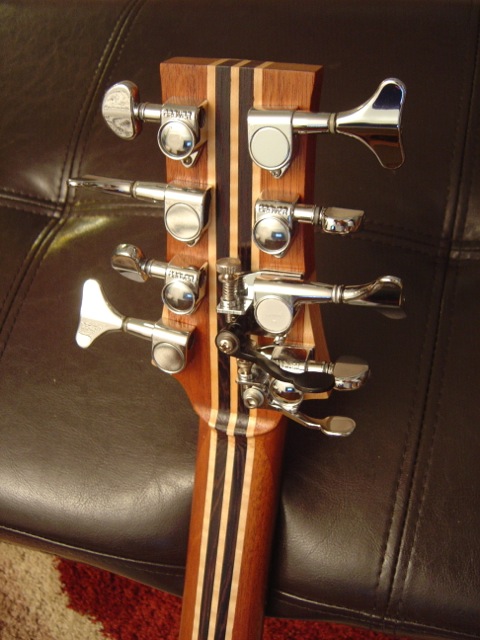
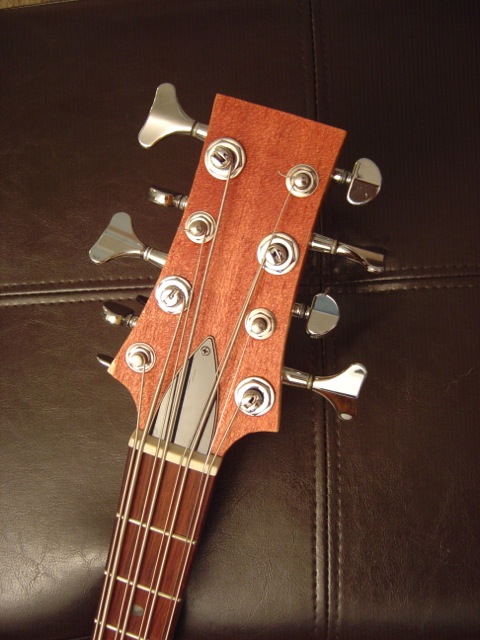
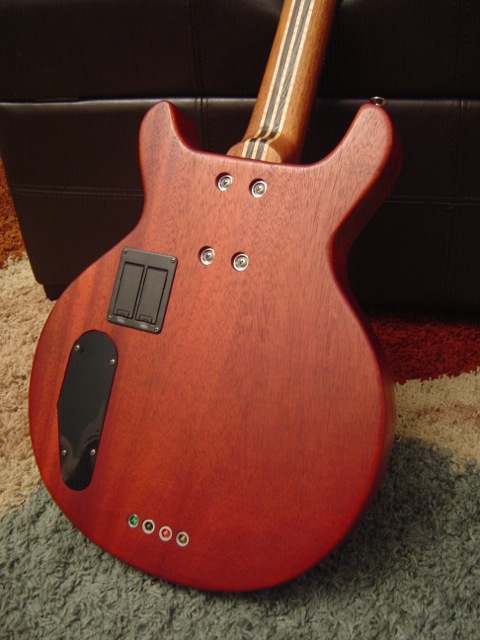



Awesome, when ya start mak’in lefties holla at me!
Awesome, when ya start mak’in lefties holla at me!
That is a total Rock Machine, great work. : )
You’ve already been ifmorned this is NOT the USS Skate at the North Pole why haven’t you issued a correction?The photo of the USS Skate used here is a denialsphere creation myth. Actual photos of the event can be found here; taken from Surface at the Pole: the extraordinary voyages of the USS Skate, Commander James Calvert, 1961.As Patrick Lockerby points out: In his book Surface at the Pole , Commander James Calvert, USN remarked of the 5th polyna found in 1959:I could see through the periscope two small black spots on the underside of the thin ice. Suddenly I could make out ripples in them. It was the first open water we had seen on the cruise. The puddles, about 2 feet in diameter, showed that the ice in this lead must be very new.Lockerby continues: That open water’ was found in March 1959, about 100 miles from the New Siberian Islands, a few days after surfacing at the pole. Previously, having found no open water, the USS Skate had surfaced at the pole through a frozen lead on March 17th. The ice was so thick that it did not obstruct the conning tower with fragments as previous thinner ice had done. Not only was the ice thick, but it was hummocked to a height estimated at 18 feet, the tallest we had yet seen in the Arctic. One of the easiest things to spot is the actual photos are taken by the light of handheld flares; your photo appears to be in daylight. On March 17, 1959 the sun had not risen yet at the North Pole that wouldn’t happen for another 4 days. I think it’s time you did a new post on the USS Skate and used the correct photos and issued a retraction for misleading your readers.
lol what?