
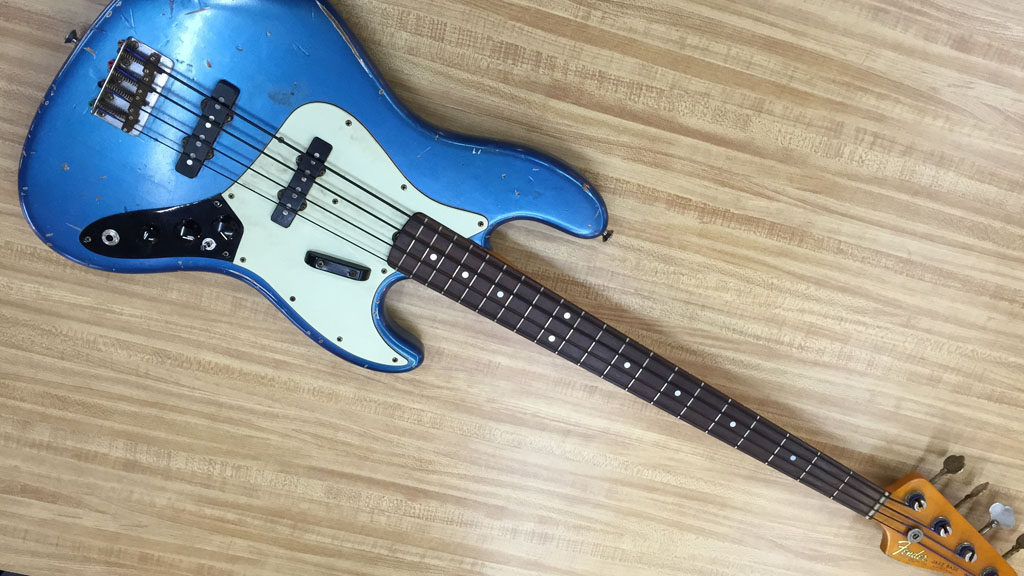
Periodically we get questions asking what certain areas of a guitar body are called, so we put together a quick set of photos as a reference.
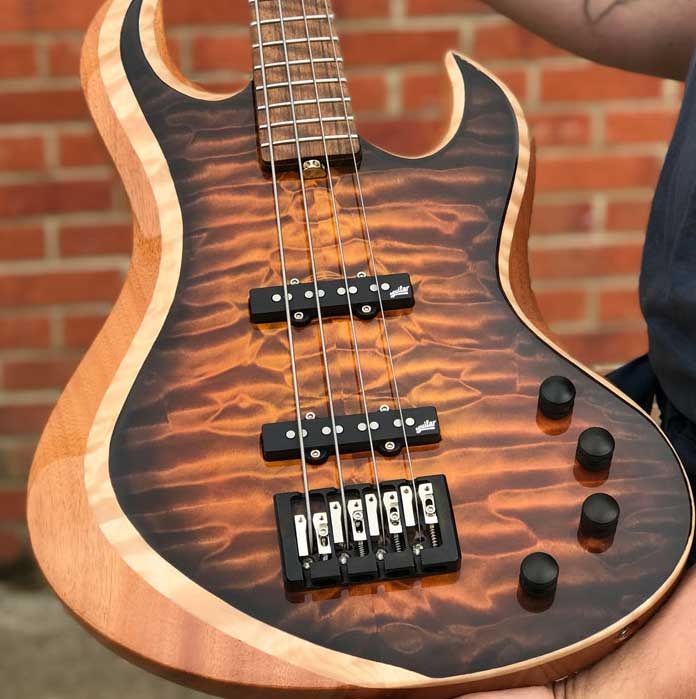
Below: Top body overall view

Below: Top view, forearm contour.
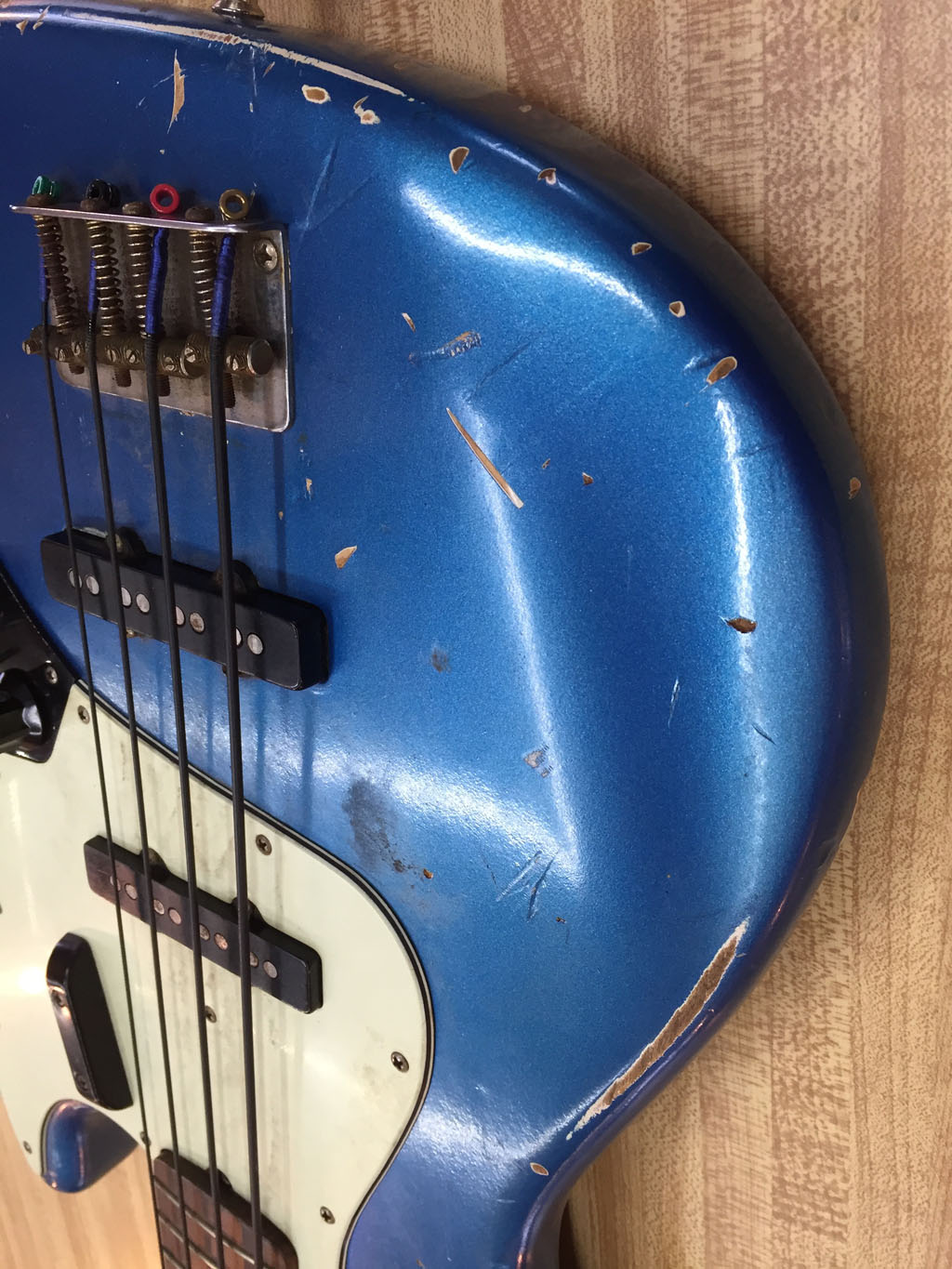
Below: Top view, lower bout.
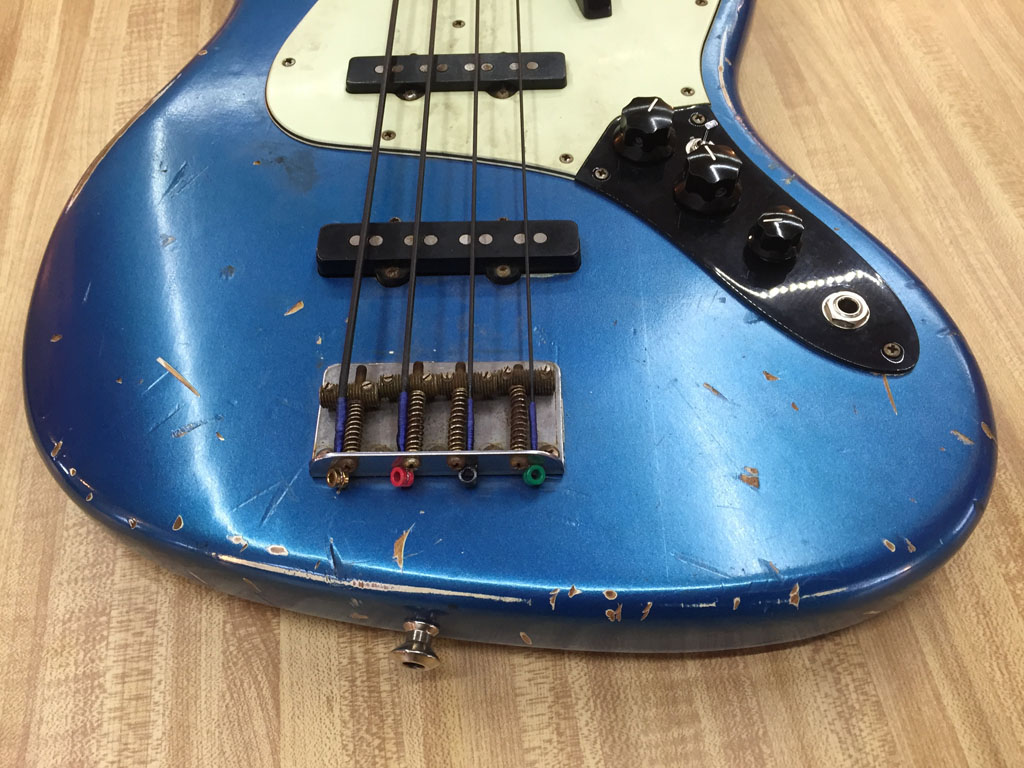
Below: Top view, upper bout.
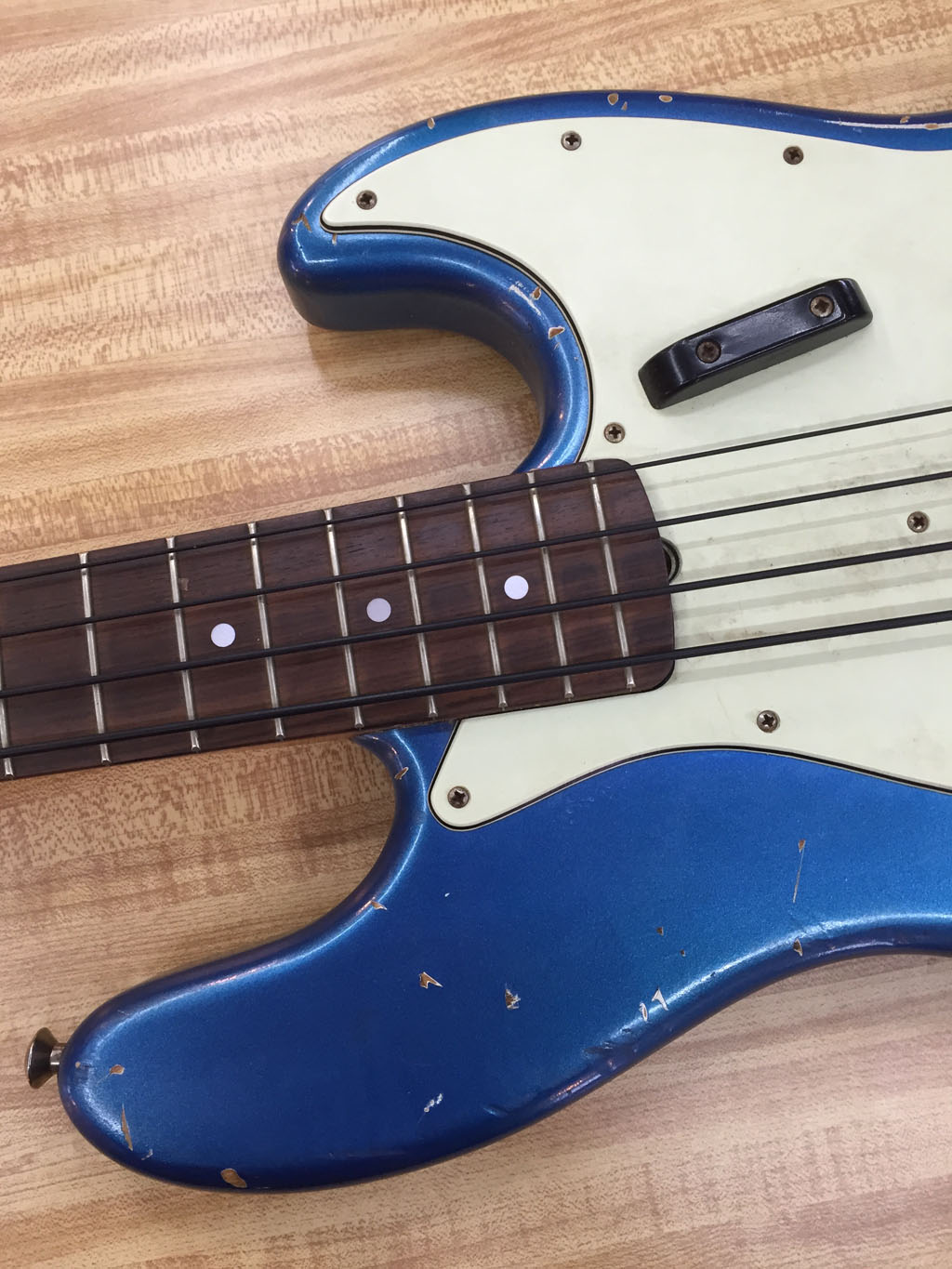
Below: Top view, treble side lower bout.

Below: Top view, lower cutaway / lower horn.
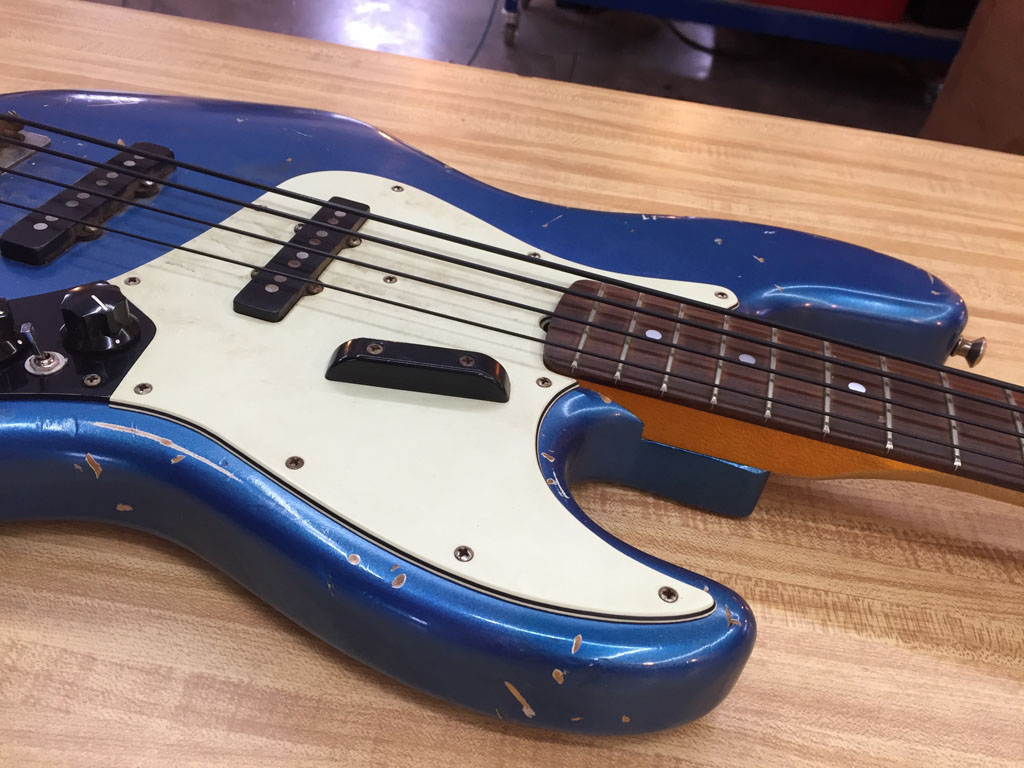
Below: Top view, upper cutaway / upper horn.
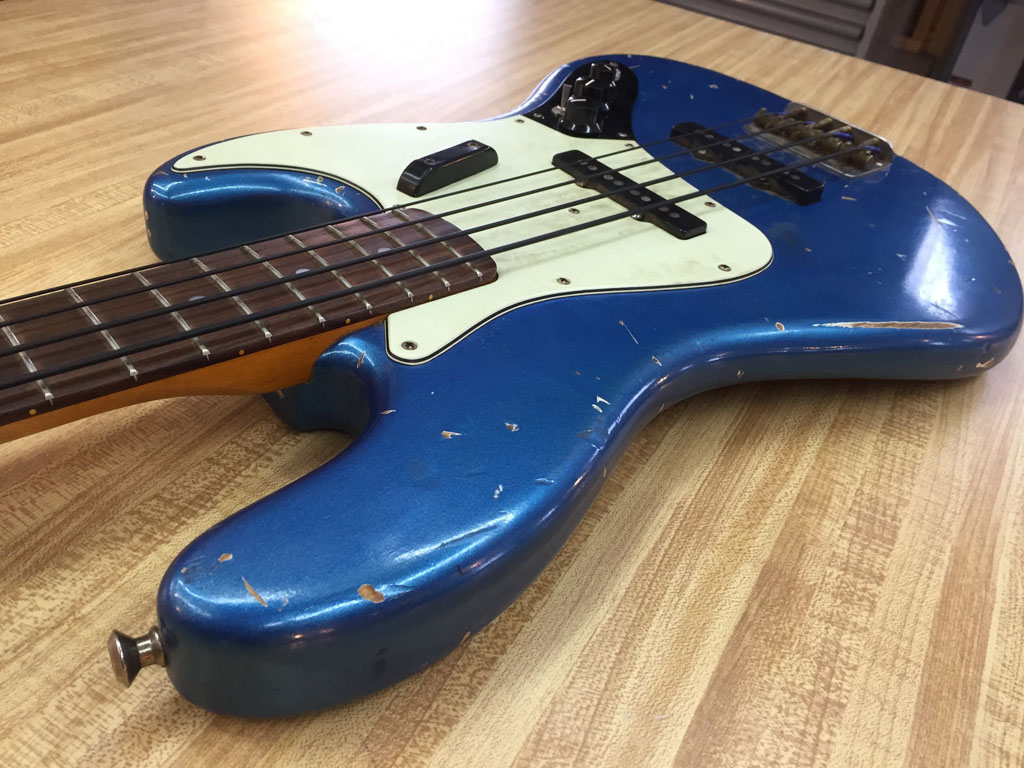
Below: The waist (the narrowest part of the guitar body).
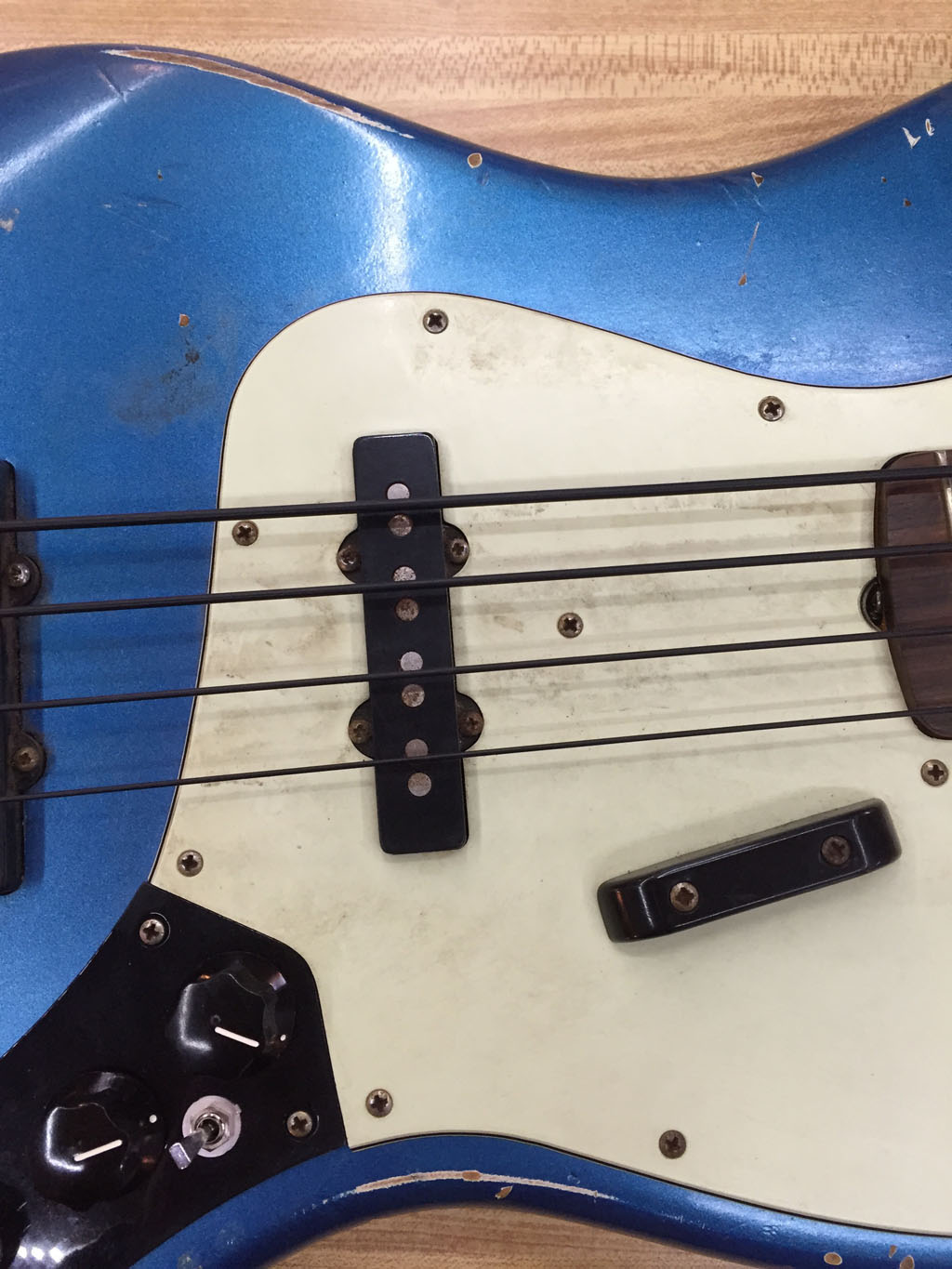
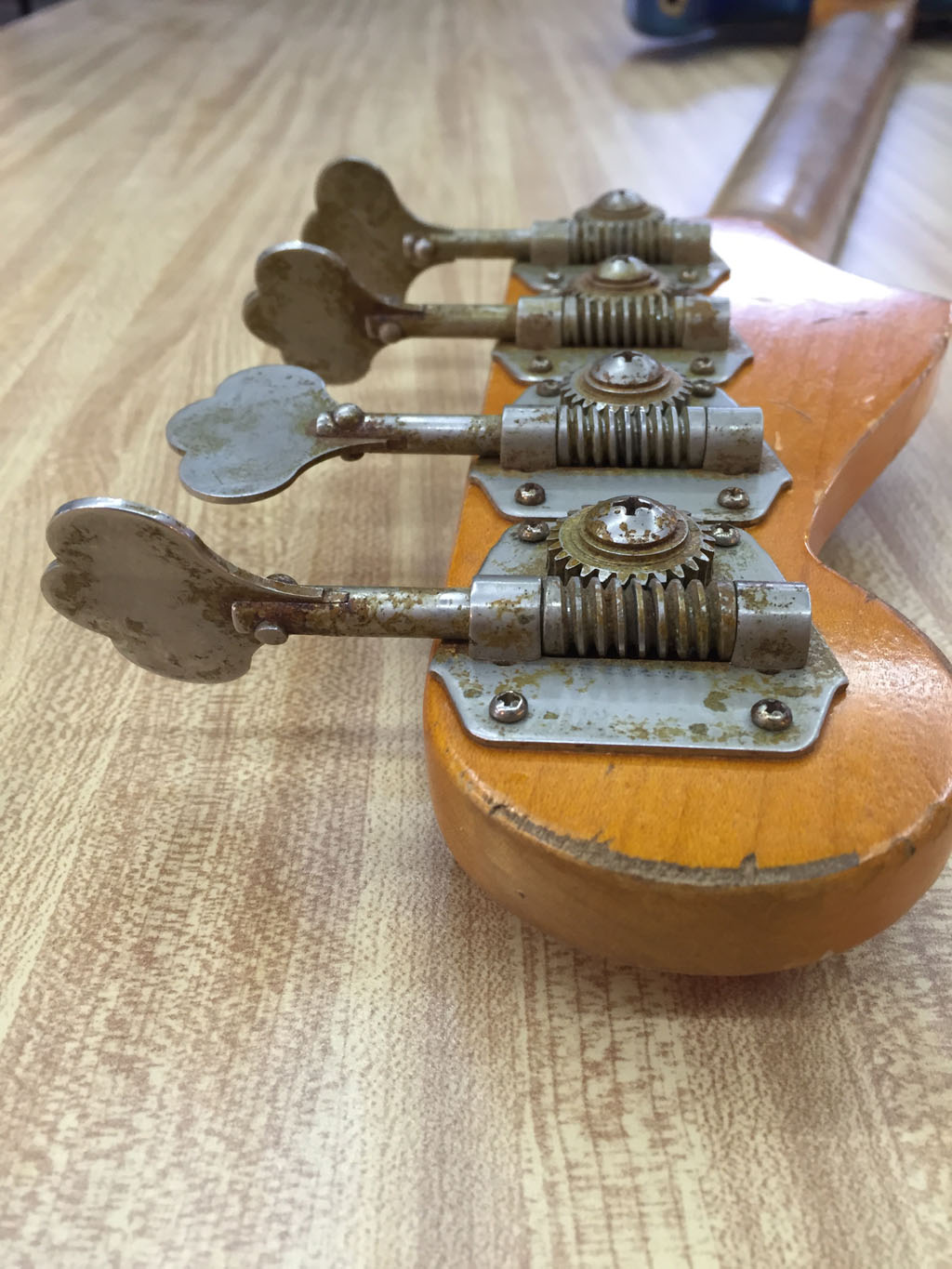
Below: The headstock (Fender calls this a pegboard) with 4 inline tuners.
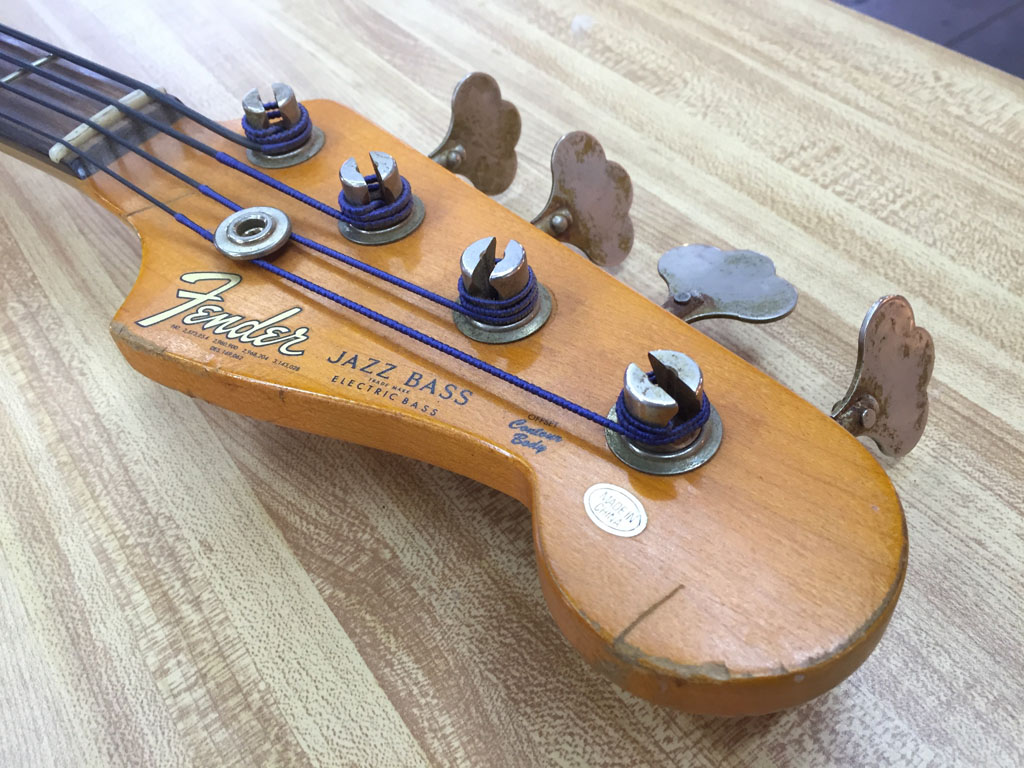
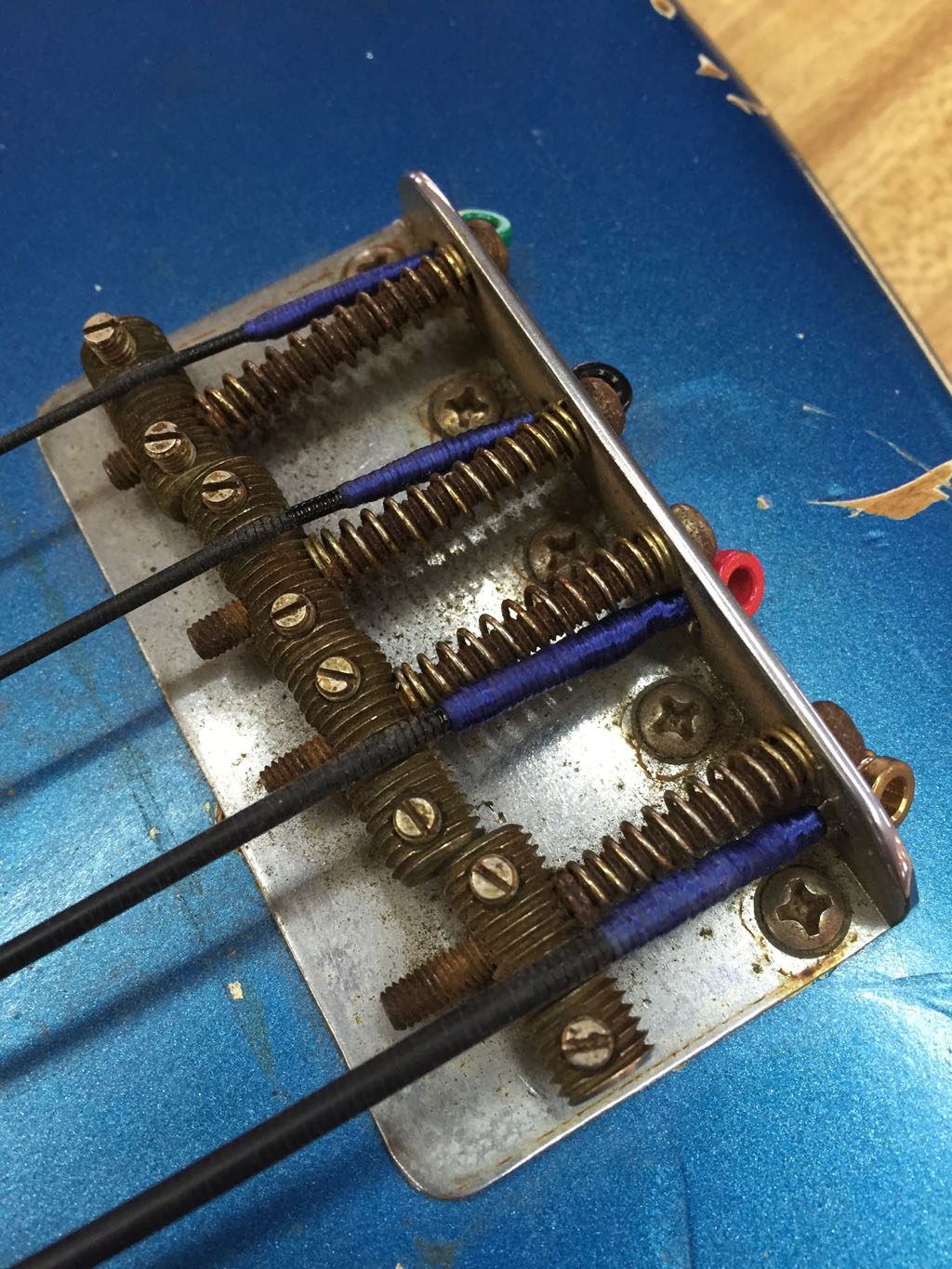
Below: Bass bridge with individual string saddles per bass string. The screws seen in the saddle are generally referred to as height adjustment or action adjustment screws. The larger screws from the rear of the bridge are generally referred to as intonation adjustment screws.
Below: Bottom view, back side.
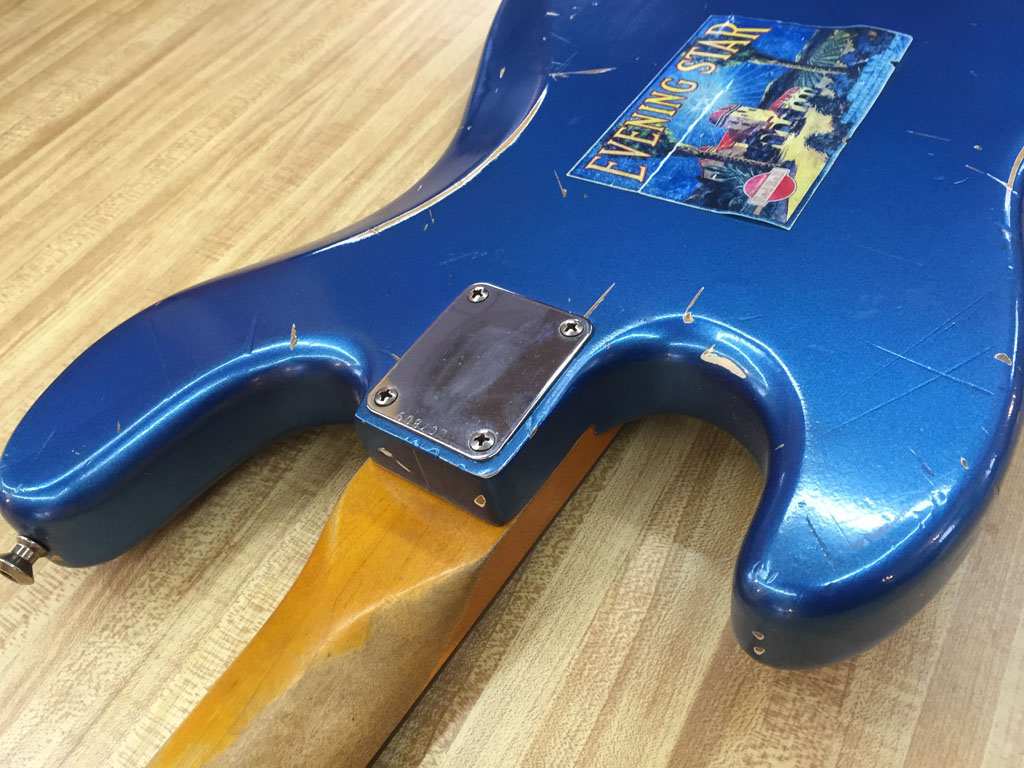
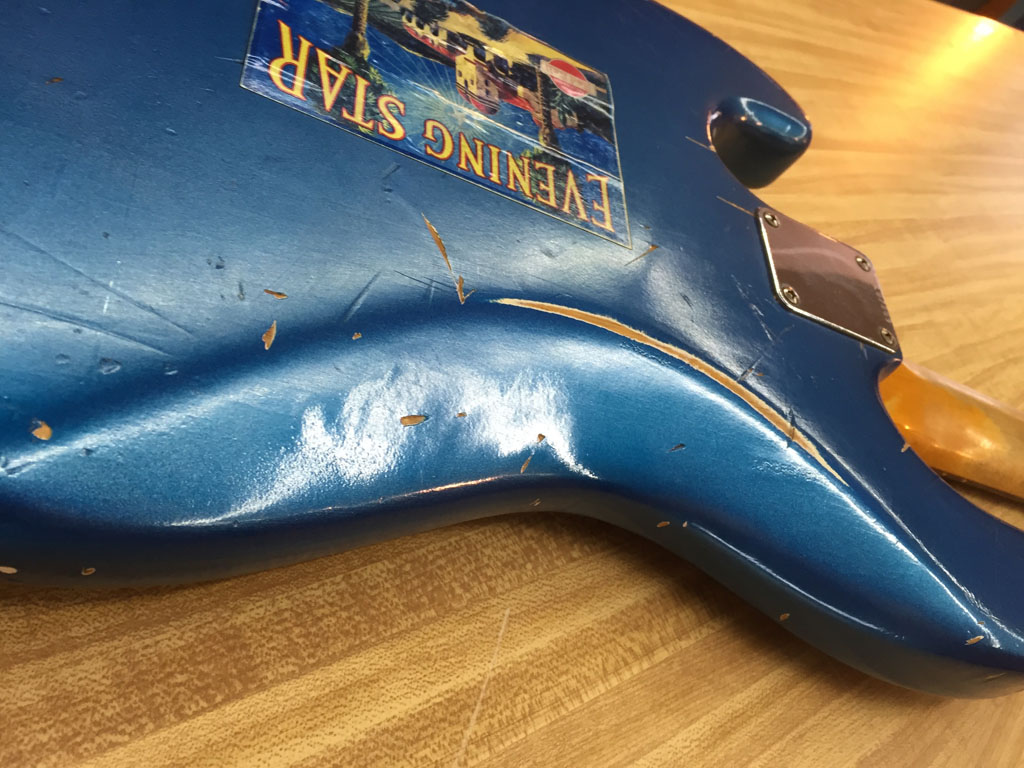
Below: Bottom view with “tummy cut”, also known as “belly cut”, also known as “rear contour shape”.
Below: Four inline tuners with open gears.
Below: Bottom view, heel.



Is it a ’65? Also, left out “Control Plate” (which being black isn’t original and it has an additional switch for (?) ,”Neck Plate” (with serial # which can date it), “Strap Peg/Button”, (looks like it was used as a lefty at one point as the lower horn has 2 holes I will presume are from a strap peg) and “String Tree” (on the hs) to lower the nut to post angle on the D & G strings. Details details! 🙂
It is probably a ’63. L07809 is the serial number. The “L” numbers were first used in 1963 and this is an early “L” number.
To make these body features more precise, add an arrow and put the caption within the photo. That’s why we have Photoshop! http://stellartone.com/Images/ImageManager/BBG.jpg
I agree with Don Campbell that adding an arrow and the caption within the photo would improve the understanding of various areas.
http://www.guitarinsite.nl/serienummers-fender.php
it is indeed a 1963 model i have a body with a 1975 anniversary neck with signature Marcus Miller.
i took the bleu off and made it like look like the anniversary model.