
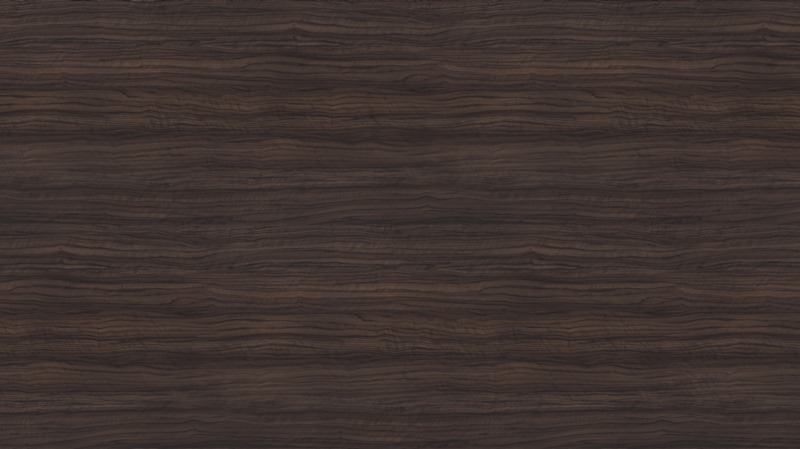
The image above may look like something that was computer generated, but it’s actually a piece of ebony, a wood commonly used for fretboard material.
Hardness of wood does actually have test to determine how hard it is, and it’s called the Janka hardness test. The Janka number is pounds-force, as in how much force is needed before the wood will dent and/or wear.
On super-soft side you have woods like basswood and eastern white pine with a Janka number of 380 to 410, respectively. On the super-hard side there are woods like Brazilian Olivewood and Austrailian Buloke, with Janka numbers of 3800 to 5000, respectively.
Ordinarily, a Janka number is important when choosing a wood for flooring, but how about for guitar building?
For example, many builders are put off by basswood for the fact it dents so easily. So even while basswood is readily available, several builders specifically avoid it because of its dent-prone nature.
Does wood hardness affect your tonewood choice when building?
Does the hardness play a factor in determining which body, neck and/or fretboard woods you go with? Or do you go by other factors such as appearance and weight and/or if a wood “knocks” correct when you listen to it before cutting?
All comments welcome, so please be sure to post a comment or two.
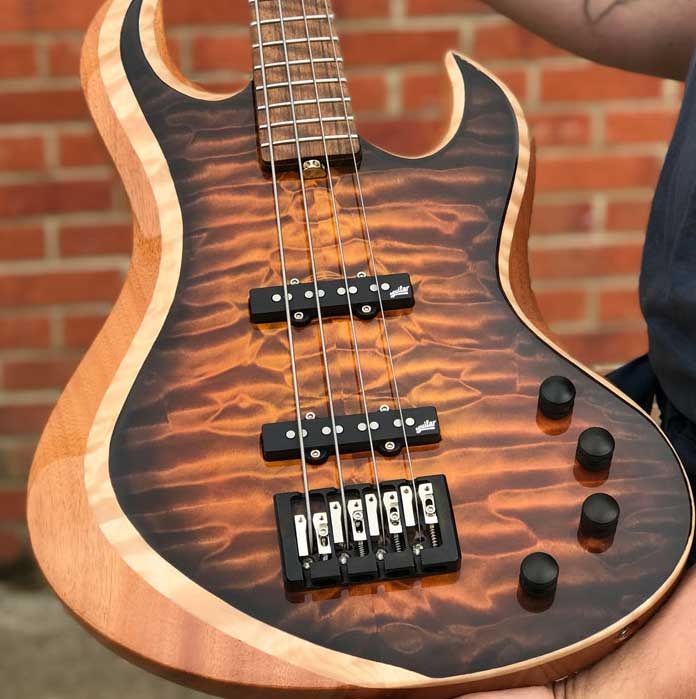


I think we can all agree that the Janka number of a given wood is very important when it comes to selecting a fretless fingerboard wood.
I’ve used and built basses made from any number of materials for the body, from Alder to Zebrano, (Even “multi laminate”, as the big companies call it, so they can charge a lot – “plywood” to you and me), and many others in between, and I don’t feel there’s a huge amount of difference tonally, maybe the harder woods are a little brighter, but if you have “Your sound” and can set it up on your amp, I feel it makes very little difference, apart fro aesthetically what you use to make a body.
Neck wise, my personal preference has always been some kind of maple with either a decent quality Rosewood or Ebony fretboard, but again that’s more because I like the “feel” of those particular timbers.
I believe there are a lot of myths written about types of timber used in solid body instruments, (though the same can’t be said about acoustics), especially from the high end and well – known, manufacturers, to keep instrument prices artificially high.
As I said, if you have found “Your sound”, then as long as you have the ability, how much you’ve paid for an instrument has little bearing on how it sounds – witness the offerings from Korea and far- eastern factories, and you’ll understand.
“The Emporer’s New clothes springs to mind”
Me? Cynical?? YOu bet your life I am!
I agree with you totally! I can dial in “my sound” with whatever kind of bass that I use. The most decent bass that I have at the moment is a 20++ year old Yamaha TRB and the cheapest one recently is an Indonesian made Squire Deluxe. On both basses I can tune in and find the tones that I need for any given situation. Regardless of the wood, maker and price the tonal variations can be available with all the electronics at the players disposal. This of course includes some knowledge and abilities from the player as well. The wood as far as I know is more of the aesthetics and durability as a medium for creating the instrument. It is not really going to be the basis of tone if the instrument is solid bodied.
Your response answers the question without ever addressing it. You speak of “dialing in” the sound of a guitar, a reference to “electronics” not building materials. Everything affects everything. A guitar built from hard wood will sound different from one built of soft wood. Whether or not that difference is “significant” is a matter of opinion. Hardness matters, as do many other factors when choosing materials for building a guitar (chambered, acoustic, or solid body). Starting with the platform on which the string is mounted and that platform’s effect on string vibration, the guitar (wood, luthite, brass, aluminum, steel) will affect the initial sound. No two pieces of wood will sound identical, nor will the (plucked) string mounted on them.
The debate will still be raging on long after you and I have moved on to greener pastures. In my experience of building guitars and basses from many different woods, even Paulownia (almost balsa light) with a Mango top, there is very little effect on the so-called tone. The one difference I have noticed is that heavy dense woods seem to produce more sustain (could be my imagination or even wishful thinking), but then again neck attachment is also critical. I always use brass inserts with a droplet of oil on the thread to attach necks, they can be cranked down much tighter than self-tappers.
In my view… and I could be wrong… the whole “tonewood” myth was created by guitar blank suppliers looking to charge hundreds of dollars for a few pounds of wood. Far more critical to tone is the type of pickups used, we are after all talking about *electric* guitars.
It seems to me a woods hardness is only related to its density when it comes to a body wood type. Yes, hardness on a fretless fretboard is an important consideration, and even on a fretted board.
To me, weight and density of the body wood does have a particular sound. I have had Swamp Ash, Alder, Mahogney and Maple bodied guitars, many of them with the same pickups and I can clearly tell the difference, but in regards to how “hard” the wood is? Eh, it might wear better in terms of dents, but that is less important.
Hard, dry grained woods like ebony and maple are said to absorb fewer overtones than softer, oily grained woods like rosewood. This is supposed to give more fundamentals in your tone if you have a rosewood fretboard, and more overtones if you have ebony or maple.
Most likely the wood density and ability to transmit sound will ipart some characteristic or color to the sound an instrument makes. With regards to the electric bass, the entire instrument is considered the system. The pickup measure the vibration of the strings. Any part of the system, in this case the bass woods and construction techniques, affects the frequencies that the bass strings resonate with. And hence are measured by the pickup. Now, as to what woods do what to what resonating frequencies. Does maple dampen lower frequencies, does walnut mute higher frequencies, is mahogany perfect…..well this is magic. And some basses have it….and some don’t.
I have built quite a few guitars and basses (all through neck designs) out of traditionally respected timbers and experimented with many Australian hardwoods. Some of my basses can end up quite heavy. Several times Ive switched pickups and there is a world of difference there and even changing bridges quite significantly alters the bandwidth response, so I would consider fretless fingerboards have a near equal influence on the response as the bridge, even the way one presses ones finger onto a fingerboard will alter response. When it comes to the materials used and here being wood, I was explained by a physicist that its the actual weight and strength that matters, or in other words , the more flexible the material, the less true the movement of the string will be, so even having a heavy body will absorb a greater amount of the vibration than a lighter one. Thus laminating woods together increases the strength vs weight. In my experience, the heavier and or more solid construction will increase the lower frequency response even to the point of compromising the upper registers. To me a tone wood is a wood that has a long grain with an exceptional lateral strength and is respectively light weight, And this can be heard when knocking the piece of wood and hearing the bass note and overtones are in harmony, The better the sustain usually indicates the the fibres are long and at a density that does wonderful things for tone. All of this is best observed in the sound of Marimba keys although some of the timbers in Marimba keys are unsuitable for long stringed instruments.
However I still think that the wood choice and construction only constitutes a much smaller percentage of tonal difference compared to the electronics….. B
Absolutely! The harder the wood, depending on pickups and electronics, the stronger the tone. The softer woods gives you a softer tone. That’s why my basses are made from swamp ash and alder. Sounds similar but differs in price. I like koa but it’s somewhat expensive. The trick is the neck, I think. The preference seems to be alder or ash with a rosewood fingerboard to get the best of hard and soft tones. I peter the maple neck with swamp ash body for the all around tone. I like ebony fingerboards but they’re expensive, and curves alot in weather changes.
I have always prefered a graphite neck with an acrylated fret board. My Bee bass 7 string has a blood wood arcylated fret board with mandolin frets and a graphite neck. It sounds fantastic.
Difinitely affects my guitar….ebony fingerboard and quilted maple neck and body…sound is very hard.
Wood is NOT magnetic, nor, does it conduct electricity. The hardness on a Fretless fingerboard will affect wear and tear and have an effect of the brightness of the vibrating string that will be transmitted in part to the pickups. Ultimately, the electronics are king. If you threw Squire guts in an Alembic it would sound as bad as Wal guts would sound good in an OLP Music Man copy!
Personally, I have never been able to discern between different body/neck woods. There are certain ones that I like more for weight balance, or general look…but, even with having greating hearing, I can’t find a difference between mahogany, maple, purpleheart, ash, alder, basswood, etc.
I believe those who feel they can tell a difference are hearing with their eyes.
Sadly, there’s no way to 100% prove who’s right on this argument…as things like “build quality” and “build consistency” are argued to refute those who agree with my point.
I believe the tone difference with different body wood species is not detectable with human hearing,Technique,strings,pickups,etc give your sound.Dan Armstrong plexiglass guitars wouldn’t be selling for much more than new prices if the body wood was important to sound.
Personally, I’ve found that wood hardness doesn’t necessarily affect tone directly, as in harder = brighter, because so many other factors come into play, like porosity or oil content. On the other hand, harder woods are usually harder to work with, so I might avoid certain woods. Again, on the other hand, ebony is harder than bloodwood, but I find it way easier to work with anyway. I’ll chose woods based on weight, stability, and looks rather than hardness.
I don’t know about “hardness” but I have basses with identical electronics from the same luthier with a different body wood and they sound quite different. Can I get them close? Sure but they definitely sound different.
There are enough woods that we can dismiss the ones that dent easily and still have tons of great sounding wood. Now the main tonal differences can be changed with EQ, however wood affects each note’s envelope. So if you’re a straight-wire player, wood matters, but if you compress your signal, who cares, just buy whatever has the nicest grain or lowest price.
Hardness is not the same as density. Hardness in and of itself, I feel, have less impact on tone than density. Hardness is useful in taking more wear and tear, and harder woods are often more dense, but not always. Correlation is not causation.
Has any one tried attaching a string to a table, or an ironing board or a monstrous piece of steel..?
I would be surprised any someone could’nt hear a difference, this is all still acoustic. so when we use various pieces of wood and keep the shape and sizes all within the parameters of what we call bass guitar the differences are bound to be much more subtle. Anyone who has heard or played a bass with a graphite neck can probably claim to notice how the same note on different strings sound remarkably similar and accurate compared to say an ancient Rickensupermassiveawesomebacker , every note practically has its own voice.
The less resonant a wood, the more energy remains in the string– so many other factors come into play here, but it is basic physics when applied to a solid body instrument
As has been mentioned; hardness only effects two things. 1. Fretless fingerboards and 2. Denting. Both can be further hardened by proper finishing.
As for “tonewoods”. There is no end to the amount of hoodoo and BS spread around by advertisers and guileless purists. Electric basses can and are efficiently built out of anything and everything including timber. The best timber is the most stable timber. Density, hardness and grain have some effect, but it largely comes down to builders to produce a structure that works with the chosen timber. Again, there are many ways to skin the cat. Don’t believe the hype. ;o)
I did a small test of this a few years ago. I built two bass’ of the same style with the same electronics but on one I used a redwood body with cherry top and spruce neck. The other was ash with dense Makore top and maple neck. Light/soft vs. heavy/hard. Cocobolo fret boards on both. Results were that what came out of the speaker was only subtly different to the point of being the kind of difference you would/could find between two instruments of the same materials. However, the “feel” to the player was significantly different. I won’t say better or worse since that is subjective but I will say that the pros that played them agree they could play all night long with the light bass but wouldn’t want to lug around the heavy one given a choice.
Great Timing. I am in the middle of having a bass built. The luthier and I talked at length and decided on a Western Cedar and Swamp Ash body to be chambered. The neck is a throw back, to be carved, Fender J-Bass style maple and rosewood. The pick-ups to be hand wound J-Bass and Gotoh hardware. The end results should be a light weight tone generator of high quality. It is all about physics, personal taste and physical factors like the health of ones back.
Stop using the term “tonewood”. That’s not how it’s used. That term refers to acoustic guitar tops, which are generally softwoods.
The facts are; different woods sound different due to several factors, stiffness, weight/density and hardness. Also oily woods have a different damping factor than non oily woods. Wood works like a comb filter to alter the tonality of the vibrating string.
Laminated necks are stiffer and more stable, which improves the sustain and tone, and tuning stability. Laminated wood is not the same as plywood, which does not have the grain going in the same direction on each ply. Solid wood is not better, nor is single piece bodies. Glue joints do not affect the sound of the instrument because the joint behaves as a single pice of wood.
More nonsense is the whole thing about transferring vibrations. The whole structure vibrates, but you want to minimize the transference of vibrations to a solid body guitar, otherwise you lose sustain. Think of a banjo. Almost all the energy from the strings goes into vibrating the drum head. You get maximum acoustic output, and minimum sustain because the energy was “robbed” from the string. This is the law of conservation of energy.
Tonewood defined: Any wood suitable for use in the construction of a musical instrument.
Interesting discussion… here’s my 2 cents on the factor of “stiffness” in two similar woods: I have several Gibson guitars made entirely of Korina, a light-weight African mahogany species, as well as guitars made entirely of the typical mahogany, from wherever they obtain it. Here are the relevant differences: The necks on the traditional mahogany guitars are flexible to the point where pulling back on the headstock can easily fret out the entire neck… or pushing forward will act as a “whammy bar”. Try this same technique, with the same amount of effort, on the Korina-necked models, and the difference is stark: not only can the frets not be made to buzz, but the strings cannot be made to relax and drop in pitch with the same ease. I won’t get into the perceived tonal differences, as much of that is subjective, but I certainly prefer the Korina models simply for this stability. Plus, they are all about 20% lighter in weight than the similar plain-mahogany versions. I never hear much about Korina basses…. maybe it’s better-suited for six-string guitars?
for all you tone snobs here, try a blind listening test. Have a friend play your basses through the same amp and see if you can pick which is which without looking.
What ever makes your boat float. As a builder for 40+yrs I like woods that do NOT
float for bass necks. Lol
I’ve built instruments out of a wide variety of woods, and several with the same design and electronics to assess the effects .in my experience the denser woods tend to give a brighter sound . I prefer maple and walnit for necks for that reason and ebony for fretboards, The body wood doesn’t have as much affect but all components add their mark , although you may not here it in a band context
I feel type of wood plays some part albeit small in the sound of a solid body guitar. Where it makes a big difference is in an acoustic guitar. Harder woods like maple etc do make a slightly brighter sounding bass than rosewood and mahogany. I prefer the feel of a maple neck with rosewood fingerboard over an all maple neck. Just my preference.
There are two factions. The Electronics Factions and the Tonewoods Faction. The Electronics Factions doesnt care so much about the wood as long as they can dial in their sound through effects and EQ etc. I myself am in the Tonewoods Faction. I prefer the sound of wood, highlighted by the type of string with very little need for effects. I CAN hear and love the differences in different types of wood in its response and tone. Of course its different with each player as style and attack differ.