
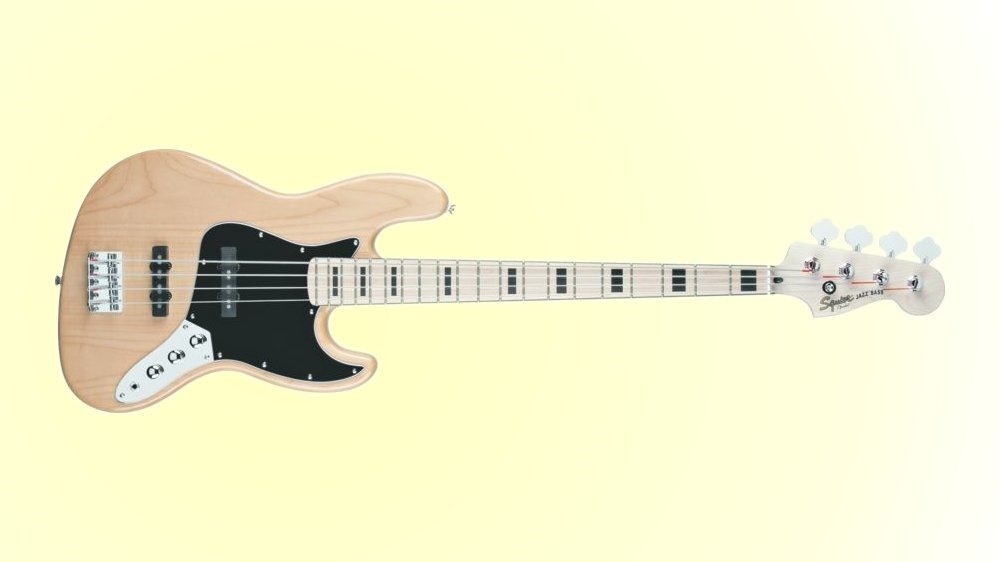
Almost nobody these days starts out with an American-made instrument as far as modding is concerned. That may change in the future, but for now, those who mod start out with Asian-made guitars simply for the reason they’re affordable. Said another way, Asian vs. Non-Asian can sometimes literally be the difference between a $100 and a $1,000 instrument. And the modder will obviously start with the lower-priced option.
While true that most of the time replacement/upgrade parts for a bass guitar are rarely exact-fit (there’s almost always some adjustments to be made), there’s something else to be taken into consideration with Asian builds, and that’s the metric system.
What you need to know about most Asian-made guitars is this:
Asian builds are by default constructed on machines that are calibrated to metric measurements, and non-Asian builds are (usually) constructed on machines calibrated to statute measurements.
In plain English: This is why on many Asian-made guitars, screw holes for things like pick guards and tuners are “off by just a little bit” when installing replacement parts.
In the way Asian-made guitars are made, measurements are made as close to the statute standard as possible using the existing machinery Asian factories already have. The end result is that to the naked eye, everything looks the same compared to a non-Asian build, but in reality there are minor variations enough to the point where almost nothing lines up proper when compared to statute. It’s not that the Asian-build was “made wrong”, it’s that it was made on metric-calibrated machinery.
Additional things to know
Not all Asian-made guitars are “all metric”
Many Japan builds are in fact built to statute standards and not metric. And at this point there are some Korean builds that are built to statute standard as well.
China and Indonesian-made builds on the other hand are almost exclusively built to metric standard.
Ordering Asian-made parts usually fit a lot better for Asian-build guitars
A good example of this are pick guards. You obviously want the screw holes to fit properly when installing it, and if you have an Asian-made guitar, you are better off buying that guard from China.
Pick guards made in the US are pretty much guaranteed not to fit an Asian-made guitar because the plastic cut and the holes were drilled using statute-calibrated equipment.
True, it’s rare that a replacement pick guard fits exactly correct. But the holes will line up a lot better if you specifically buy an Asian-made guard for an Asian-made guitar.
Products labeled as “drop-in” were machined to STATUTE measurements
“Drop-in” usually means “near-exact fit” (again, never totally exact because there are always minor adjustments to be made), but that near-exact fit was machined on statute-calibrated equipment.
The reason? Because the standard is statute, especially for Fender-branded guitars.
American and Mexican Fender guitars are both machined to statute standard
Specifically concentrating on Fender for a moment, you can mix/match parts from American and Mexican and they will fit (for the most part) because they’re both machined to statute standard.
And yes, this does mean you will probably have a much easier time modding a Mexican-made Fender compared to an Asian-made Squier.
The best advice you can take from this?
I’m not saying to avoid Asian-build guitars, because yeah, they’re affordable and readily available. Just be aware of “the metric factor”, so to speak, because with an Asian build you may have to saw and drill a little more compared to a non-Asian build to get parts that were machined on statute-calibrated equipment to fit correctly.


It all makes sense now. Thanks
i have an Indo Squier Jazz VM that is fretted. Bought a Indo Squier Jazz VM fretless neck for it. Only one hole lined up. Had to plug other 3 and re-drill. Beware.
well on my opinion the american made should start making everything on metric, at the end of the day Americans are the only one using imperial measurements. It’s the way to be standars
It’s not non-Asian, it’s the US against the rest of the world! Why don’t you join us – it’s really not that sccrey! And what’s with “statute” measures? Think of them as “Imperial” measures, from when you used to be part of the British Empire, and it might be easier to ditch them…
I had to expand the length of the bridge pickup rout in an Indonesian P-J bass before a “standard” Jazz Bass bridge pickup would fit. Mounting ear positions were OK, it just needed a little off the sides for the pickup to drop in. Depth of pickup and control cavities should be checked too, to make sure that new components will fit. I almost got bit bad by this one after copper foil shielding a Tele control cavity, only to find out the new 4-position pickup selector was almost too deep to fit in the cavity. Fortunately bending the wiring tabs gave me just enough clearance to button everything up. I did have another rude surprise on this Tele. The bridge plate wasn’t in the right spot and had to be moved back about 1/8″ so the pickup wouldn’t touch the now shielded cavity it was in. Measure everything three times, even the stuff you think is not going to affect you.
I love US made instrument, but I do not like statute measurement.
I have a US pickguard on a Squier Indonensian P-bass, and the holes lined up perfectly. The only difference was one hole was relocated, but that’s ONE hole I had to drill. I didn’t have to plug and redrill. Now replacing Asian-made pickguards with asian-made pickguards has proven more trouble to me, because I have two Indonesian Precision basses and the OE pickgaurds don’t interchange at all.
Every musical instrument factory I visited in China – there were about ten of them – used inches as their base unit of measurement. There are reasons the Fender lines are different, but metric/English differences aren’t one of them.