
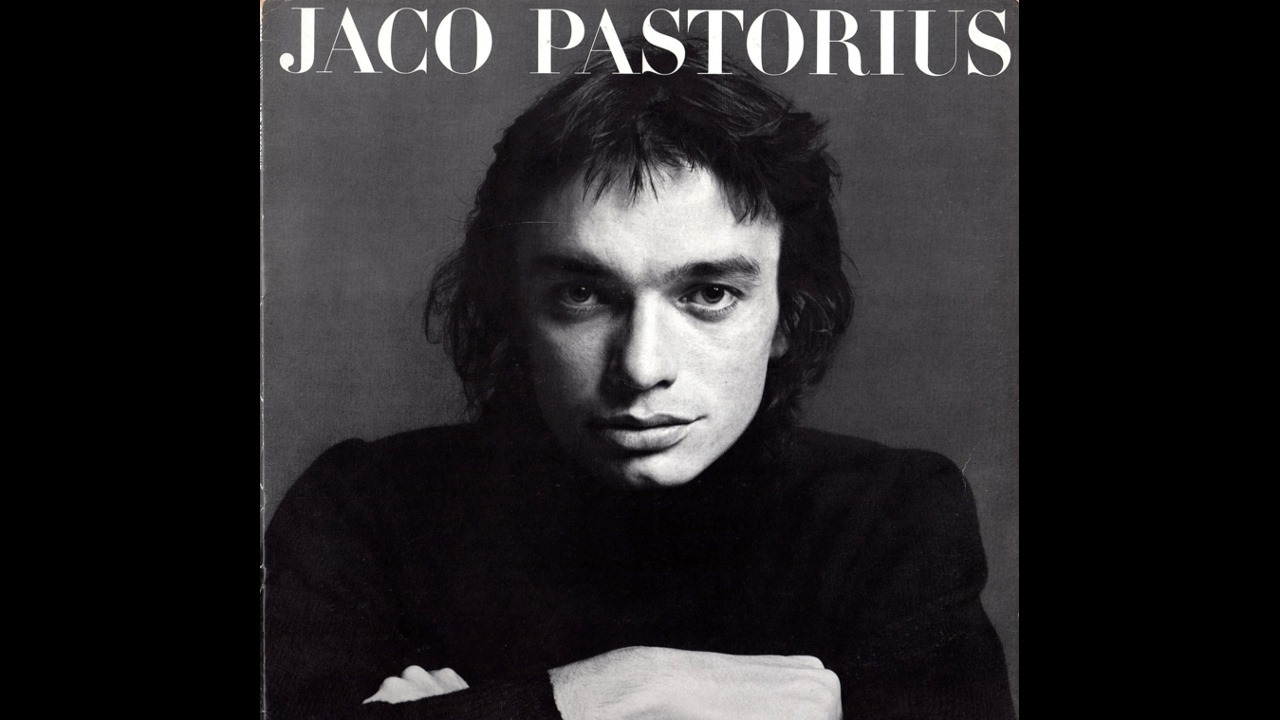
Some bass players consider Jaco Pastorius’s sound heard on Portrait of Tracy to be the ultimate bass tone. It’s totally clean and totally organic. Every note is heard as clear as a bell, volume balance between notes is near-perfect, and the more you listen to it, the more you say to yourself, “I want that sound!”
Understanding Portrait of Tracy
Here is the original studio recording:
The first thing to know here is that this is a free form jazz piece. This style of music does not follow a specific metre. It is up to the musician to dictate where the music flows, so to speak.
The second thing to know is that musically, Portrait of Tracy makes a lot more sense to the brain when you hear it played on actual piano:
Once heard on piano, you get a much better idea for what Jaco was originally going for with the song. He was taking what he most likely heard on piano, translated that to the electric bass and from that created his own sound.
However, there’s a third thing to know. It’s not really possible to emulate a traditional acoustic piano on the electric bass…
…but it is possible to make an electric bass sound like a Rhodes electric piano, an instrument that was popular in the mid-1970s at the time Jaco recorded Portrait of Tracy.
When you listen to a Rhodes played free-form style, you can definitely tell it had some influence on what Jaco was doing:
Making an electric bass sound like a Rhodes electric piano is difficult to master. Certainly not impossible, but not easy. Plenty of practice is definitely required.
Saying “it’s all in the fingers” has truth to it, but the follow-up question concerning Portrait of Tracy is “…and what are you trying to do with those fingers?” The answer is that you’re aiming for a Rhodes piano style sound.
Do you need a Jazz Bass?
Some believe that the only way to get the Jaco sound is to use a Jazz Bass.
True? Partially.
What makes the Jazz Bass so good for this particular tone are the two single-coil pickups, allowing you to shape the sound just about any way you want it. The combination of two volume controls and one tone control, while simple, is a very good design.
With Portrait of Tracy, you will notice in the song that the bass frequencies are rolled down a fair amount, indicating the rear pickup was favored for the recording. How much was the rear pickup favored? We’ll never know for sure. But it’s probably true the rear pickup was rolled up full, the front pickup rolled back to about 25% and the tone control rolled back at least 50%.
Bear in mind this is all speculation. Your guess as to where Jaco had his controls set to would be just as good as anyone else’s guess.
In the end, what matters here is that it helps greatly to have a really good rear pickup. So even if your bass only has a single rear pickup, if it’s a good one, you can get the tone.
What does “really good rear pickup” mean here?
It means a pickup that promotes good string balance.
An example of this would be the Bartolini B-Axis. Yes, it’s a modern pickup made with modern tooling, but where string balance is concerned, this pickup nails it. It’s offset pole pieces really help bring out the notes without any “wavering.” And when going for the Portrait of Tracy sound, those offset poles really help to get the tone.
Would the Nordstrand Big Singles and Nordstrand Big Splits also work? Yes (especially if you want a soap bar and not a Jazz size pickup.)
Is the compressor effect required?
Something to know about the Rhodes electric piano is that the way one works is in fact from the use of a pickup. There aren’t any strings in a Rhodes, but rather metal tines. The tines are struck and the pickup amplifies the sound.
A Rhodes naturally sounds like a compressor effect is in use, however what you’re actually hearing are the tines vibrating/ringing, and while it may sound compressed, it isn’t.
With the electric bass, you’re obviously using long strings and not short metal tines, so to reproduce the natural attack and decay of a Rhodes, a compressor effect can help if used lightly.
Something not present in Portrait of Tracy is thump, so if a compressor is used, attack would need to be set to a minimal level.
Better compressors to use would be the kind with the most tone shaping options possible, namely the Aguilar TLC and the MXR M87.
Best reason to use a compressor for Jaco tone: If you’ve tried everything possible to get even string balance but you just can’t seem to get the sound, a compressor will “squash” your tone (in a good way) so that notes have even volume. Experimentation is of course required to find the right squash, but in the end it should help out quite a bit, because compression, generally speaking, does even out note balance volume.
“I already have a preamp that adds in compression. Is that enough?”
Maybe.
Some preamps color sound in a way that adds compression while others are engineered to purposely not do that. If you have a preamp be it on-board or external that compresses when engaged, that may be enough to get the Jaco tone you’re looking for. Your ears will tell you for certain whether you’ve got the sound or not.
“What frequencies should I be aiming for?”
Mids. Again, there’s really no thump and not a lot of crisp treble heard in Portrait of Tracy, so aim for the mids.
Jaco favored the Acoustic 360 amplifier, which undeniably gave a huge bump up in the mid frequencies for his Jazz Basses. That being true, it can be arguably said that you can’t get Jaco tone without really paying attention to those mids and making them heard very clearly.
Go for the mids, and you’re on the right track.
Is this the de facto way to get Portrait of Tracy tone?
This is just a guide.
You’ve learned the type of song Portrait of Tracy is, and given a few ideas on how to get the sound with modern equipment. After all, not everyone has $9,000 or greater to buy a mint condition Acoustic 360, never mind a pair of perfect vintage ’60s Jazz Basses, one fretted and one fretless (the total cost of which we wouldn’t even dare speculate.)
Do you know a better way?
If there’s a way you know how to get Jaco’s tone on Portrait of Tracy, please share what you know by posting a comment below. What worked (even if somewhat,) what didn’t work, things you’ve tried, basses that worked well, and so on.


No mention of strings. Gauge? Construction?
Jaco favored the Rotosound Swing Bass 66 in 45-105 size http://bit.ly/rotosb66
Those are modern gauges. Jaco would have used a set of Roto rounds in .46-.63-.80-.102. Mind you, I doubt anybody would really be able to tell in a blind test.
This article should have probably mentioned his fingerstyle. Jaco played over the bridge pickup and favoured the pads of his fretting fingers for more “mwah”. You will really notice a difference in tone (and how fast you can pluck the strings) when picking over the bridge pickup. Jaco discusses this in “Modern Electric Bass.”
Oh, and “Portrait of Tracey” is played on a fretted bass. That certainly helps get your notes to ring out nice and clear, particularly the end harmonic. That is pretty much impossible on a fretless bass.
In 1976 Jaco did a Downbeat interview in which he revealed almost every aspect of his sound. Besides the legendary ‘Bass of Doom’ Jaco used Rotosound 66 strings, and he had lacquered the fingerboard of the bass after pulling out the frets. Jaco talked about where he touched the strings, which pickup he used (bridge), and how he recorded. The Acoustic 360 was rarely in the mix in Jaco’s recordings–he typically plugged directly into the board with no preamp. He had a ridiculously resonant Jazz bass, super bright strings, and used his fingers typically over the bridge pickup, with the neck pickup dialed out. That’s all you need to get his sound–oh yeah, and that touch, that ear, that brain, and that talent.
My understanding (as I recall stated by veteran luthier Rick Turner) is that Jaco actually had his wood-necked wood fingerboard coated with Smith Brothers boating epoxy. So, with regard to the board surface component of how Jaco developed his tone: there are now far less messier ways to achieve this. It includes an epoxy-based carbon fiber reinforced fingerboard that will be presented at the upcoming Winter NAMM Show in Anaheim, CA.
“Portrait of Tracy” is an etude written to explore the harmonics of open and stopped strings combined with stopped notes played in the lower register. Like many other jazz etudes, (Giant Steps, Moment’s Notice) it also happens to be a beautiful musical composition. Jaco told us that “the sound is in your hands”. He sounded like he did because his hands were impeccable.
To get the Jaco sound, get Rotosound RS-66 strings on an old, preferably pre-CBS Jazz bass, dime the bridge pickup and tone control, shut the neck pickup off and WORK ON YOUR HANDS.
Stephen Mosher
hi
Are you sure he played on his fretless bass ?
Sounds to me like he played it on his fretted…
My understanding is that this was done post fret-pulling to aid in diminishing fretboard wear/fretboard stabilization. It just so happened to augment his tone, thus contributing to his style as it developed in part based on the factors discussed in this thread. If you were to ask Turner about tone controls, he would likely raise and wiggle his ten fingers. Without knowing what to do with them, a player ain’t got nuthin’. We all know that a lousy player cannot make a great instrument sound worth s___…. but a great player can make even the worst instrument sound pretty darn good. For pitz, it is all in the fingers as they connect with the strings and the fingerboard. Next link in the chain is the sonic ability of the neck beam beneath it… then right on through the other elements discussed on this page, and much more.
Proper technique and practice! String type is important. Didn’t jaco use Roto 66LD? Also, curious about the Seymour Duncan Custom Shop Jaco Weather Report pickups designed from the ‘exact specs’ Seymour used to require jacos pickups. Do you guys sell them? Might try them out …
What about the delay and chorus that he used?
Jaco had the back pickup rolled all the way up and the front pickup anywhere from 0% to 50% depending on how much bass needed to be there for the room he was working. Although 20 to 30% is a good estimate. The tone control was always turned all the way down. That was the Jaco sound on a Jazz Bass.
He didn’t have the tone control turned down. You can hear the growl from the Rotosounds. His tone sounded that way because of the Vari Mid circuit on the amp. He removed the stack pots from his bass because it was too dark sounding.
I think that the most important part of the signal chain is being ignored-Jaco! Often imitated but never duplicated.
‘Tracy’ was played on his ’62 FRETTED Fender jazz bass, strung with rotosound strings with the bridge pickup solo’d. Also, he’s running through his Acoustic amp setup with a slight amount of what sounds like some sort of chorusing effect.
No one has mentioned his speakers. 18 “ speakers in folded horn enclosures. I saw him play and he had a pair of them. His stage sound, which was pretty much what you heard on recordings had a lot to do with the sound of the 18”s.
You need that Acoustic amp! You are hearing the amp mic’ed. And he always played with the bridge pickup soloed. He used the Vari Mid feature on the amp to boost the mids to make his bass sound like an upright. This was also a product of the 18″ speakers.
As far as the tone control is concerned, There’s no way it was “turned down” or rolled off. The tone control on a J-Bass simply rolls off the top end, it in no way adds top end. Passive pick ups, passive tone control. If anything the tone control is turned all the way up (flat). I’ve removed the tone control on my present J-Bass and former ones as well. If you want to alter the tone of the bass use your pre-amp and the better the pre-amp the better the end result.
Yep, tone control on full, all the way up for sure
Pickups sound like out of phase (polarity), mixed a little bit “minusing” neck pickup’s signal with some amount of bridge pickup’s signal. It provides singing midrange tones you can not get any other way. Tone cap can be a smaller value as standard, cutting just highs, not mids. Signal circuit is very long. Starts from player’s brain and ends at listener’s brain. But some other very important parts are the loudspeaker, enclosure, microphone and mic preamp. Do not forget about analogue tape recording-reproducing process too.
Some of the points here are a real stretch. I’d maybe leave the Rhodes out of the discussion entirely. Or use a better recorded example such as Lonnie Liston Smith’s “Aspirations”.
I don’t hear a pianistic influence in “Tracy”. Some people who hear the tune for the first time and don’t know what it is think it is a piano on a timbral basis. Victor Wooten admitted to that. But I wouldn’t reverse engineer it and claim that Jaco wanted to make his bass sound like a piano or that he wrote Tracy on the piano and transferred it to the bass. Bass harmonics are not a cool, convenient imitative sound. They are an amazing and unique electric bass sound first and foremost.
I’d be stunned if Tracy was composed anywhere other than on the bass. At that time, Jaco was undistracted, deep into discovering the potential of his instrument, and deep into his personal musical development. Once he began working on harmonics, he explored them to their fullest in his tenacious, intuitive manner and in a way that no one had done previously. With his talent level, dedication, and physical ability (touch, dexterity, etc.) he turned his explorations into a stunning work of art. I wouldn’t make it any more complicated than that. This is like the Bruckner symphonies. No one else could have produced one note of that piece of music.
My guess is that the tune was recorded through a miked amp in the studio. On some of the source versions (original vinyl, early reissue edition CD), it sounds as though there’s a distant snare rattle bleeding in on a couple of notes.
As much as I treasure the tune, I have never learned to play it, nor have I aspired to play it. It’s Jaco’s very special thing. I’m content to admire it as his masterwork. I also never “wanted” to acquire Jaco’s sound as the writer states. Trying to sound like a halfway decent version of myself is more than enough challenge to keep me occupied for the duration.
What William says here.
Most important here is that in 2017, we’re still talking and trying to understand Jaco. I recently started an instrumental jazz/rock band and we play two Weather Report songs, “Birdland”, “Palladium” and Jaco’s “The Chicken”. Learning the bass for these songs has been such a rewarding experience. I tell more people about Jaco and his legacy. The documentary by Robert Trujillo is a must watch for all. I saw Jaco on the 1977 “Heavy Weather” tour at Winterland in San Francisco. He was THE MAN !
Tone control all the way up, you could never hear those harmonics if it was rolled off!
Really tho…. So much is in the hands!
I picked up a bass And played with the same settings as the guy before me and he just didn’t have that natural hand/finger or (for lack of a better word) ‘Mojo!’
Seriously though… It’s really you a bit more than the amp/bass/pus ~ maybe even a lot more! Truth!