This is a continuation from part 2.
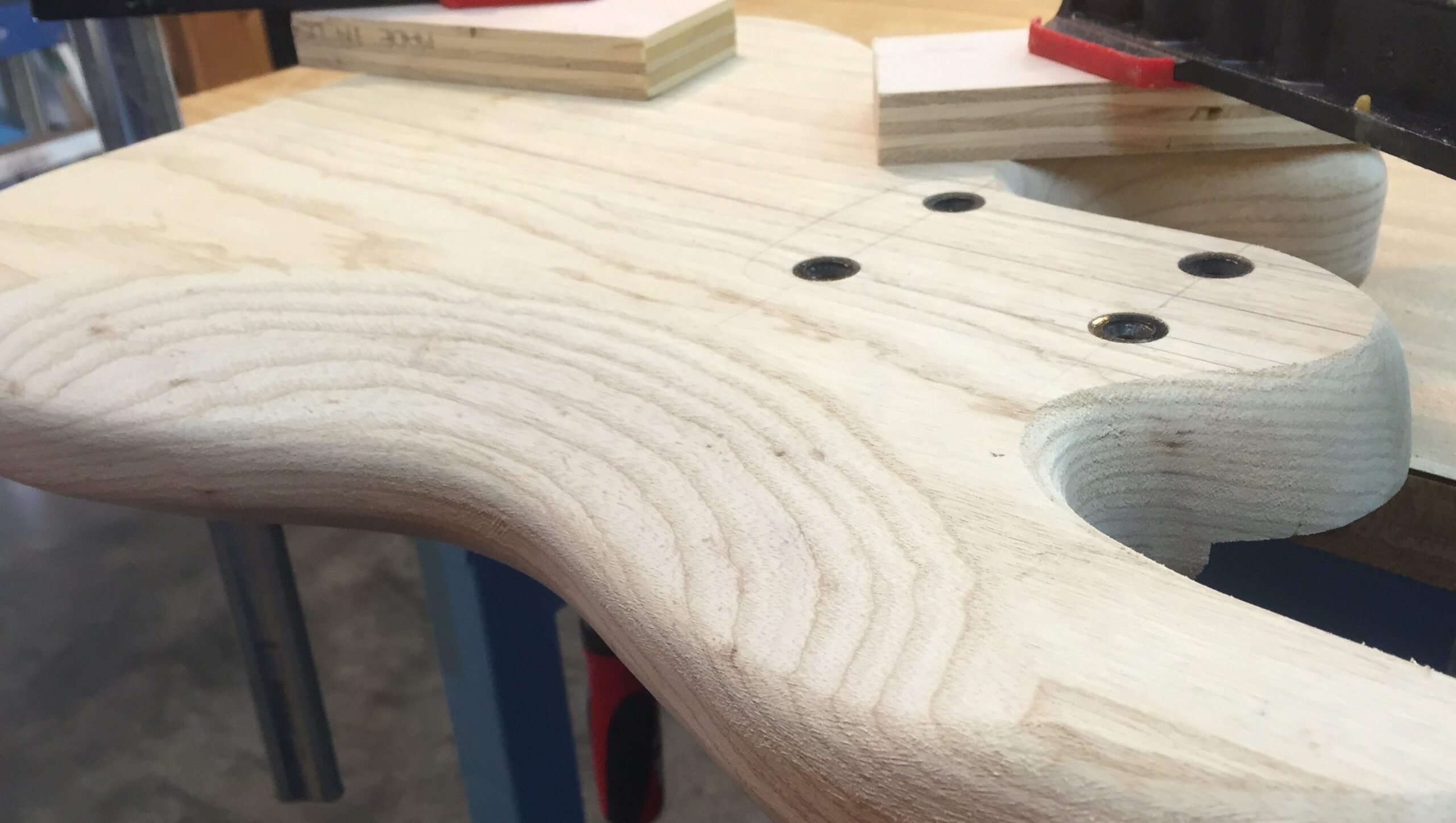
Below: A look at the contour cut before cutting begins. Note the pronounced edges; these will be rounded off.


Below: Filing is about to begin.

Below: The cut after filing (approximately under a minute of filing was required to get this shape).

Below: View of upper horn. Note that the wood is flat on the side; this is what will be rounded off.

Below: This is the file used to round off that flat side.

Below: The edge has been blended halfway because the body will be flipped to perform the same work on the other side to produce an even curve.


Below: Here we see the flat spot on the edge under the curve before rounding it off.

Below: The flat spot has now been blended into the the curve.

Below: The end result of filing the contour cut, the top horn and the lower bout.


Late to arrive, but how are you controlling what I call “pith valleys” that form when sanding away the softer wood and the grain stays proud?
Hey Joe, That is a great question. This particular piece of ‘swamp’ ash is more medium density rather that super crazy light-weight so the differential of density between the grains and the meat between them has not been causing problems for me so far. That might change when I start finishing sanding it, but my instincts are telling me it won’t be a problem with this piece. A little while ago I tried making a body out of obscenely light-weight California Redwood, and I was having the problem you are describing in a big way. I struggled with it all through the build. The only way I found to combat it was to use hard sanding blocks with adhesive backed abrasives, and very very careful sanding. It was not allot of fun. Softer woods definitely have some unique challenges.